Notice is hereby given that an ordinary meeting of the Horowhenua District Risk and Assurance
Committee will be held on:
|
Date:
Time:
Meeting Room:
Venue:
|
Wednesday 7
June 2023
3.30pm
Council
Chambers
126-148 Oxford St
Levin
|
|
Risk and Assurance Committee
OPEN AGENDA
|
MEMBERSHIP
|
Chairperson
|
Cr Sam Jennings
|
|
|
Deputy Chairperson
|
Cr Paul Olsen
|
|
|
Members
|
Cr Alan Young
|
|
|
|
Cr Clint Grimstone
|
|
|
|
Cr Jonathan Procter
|
|
|
|
Mayor Bernie Wanden
|
|
|
|
Jenny Livschitz
|
Independent Member
|
|
|
Sarah Everton
|
Independent Member
|
|
Contact
Telephone: 06 366 0999
Postal
Address: Private Bag 4002, Levin 5540
Email:
enquiries@horowhenua.govt.nz
Website:
www.horowhenua.govt.nz
Full Agendas are available on Council’s website
www.horowhenua.govt.nz
Full Agendas are also available to be collected from:
Horowhenua District Council Service Centre, 126 Oxford Street,
Levin
Te Awahou Nieuwe Stroom, Foxton,
Shannon Service Centre/Library, Plimmer Terrace, Shannon
and Te Takeretanga o Kura-hau-pō, Bath Street, Levin
|
|
Risk and Assurance Committee
07 June 2023
|

|
ITEM TABLE OF CONTENTS PAGE
PROCEDURAL
1 Apologies 5
2 Public
Participation 5
3 Late Items 5
4 Declarations
of Interest 5
5 Confirmation
of Minutes 5
REPORTS
6 Reports
for Noting
6.1 Audit Management Letter,
Engagement letter and Audit plan for 2022/23 Annual Report 7
6.2 Treasury Report for the
March 2023 quarter 85
6.3 Risk and Assurance
Committee Resolutions and Actions Monitoring Report 95
6.4 Health, Safety and
Wellbeing Quarterly Report - June 121
6.5 Insurance Renewal Strategy
Update 141
6.6 Risk Management Status
Quarterly Report - June 2023 153
6.7 Internal Audit Work
Programme 225
6.8 Conflict of Interest
Report 227
6.9 Legislative Compliance
Report 243
6.10 Risk and Assurance Committee Work
Programme 247
7 Proceedings
of Committees
IN COMMITTEE
8 Procedural
motion to exclude the public 251
6.6 Risk Management Status
Quarterly Report - June 2023
d. Operational Risk
Register May 2023 Updated 10 251
e. Organisation
Risk Register May 2023 Updated 10 251
Karakia
|
Whakataka te hau ki te uru
Whakataka te hau ki te tonga
Kia mākinakina ki uta
Kia mātaratara ki tai
E hī ake ana te atakura
He tio, he huka, he hau hū
Tīhei mauri ora!
|
Cease the winds from the west
Cease the winds from the south
Let the breeze blow over the land
Let the breeze blow over the ocean
Let the red-tipped dawn come with a sharpened air.
A touch of frost, a promise of a glorious day.
|
1 Apologies
2 Public Participation
Notification of a
request to speak is required by 12 noon on the day before the meeting by
phoning 06 366 0999 or emailing public.participation@horowhenua.govt.nz.
3 Late
Items
To consider, and if thought fit, to pass a resolution to permit the
Council to consider any further items which do not appear on the Agenda of this
meeting and/or the meeting to be held with the public excluded.
Such resolution is required to be made pursuant to Section 46A(7) of
the Local Government Official Information and Meetings Act 1987, and the
Chairperson must advise:
(i) The reason why the
item was not on the Agenda, and
(ii) The reason why the
discussion of this item cannot be delayed until a subsequent meeting.
4 Declarations of Interest
Members are
reminded of their obligation to declare any conflicts of interest they might
have in respect of the items on this Agenda.
5 Confirmation of Minutes
5.1 Meeting minutes Risk and Assurance Committee, 1
March 2023
5.2 Meeting
minutes In Committee Meeting of Risk and Assurance Committee, 1 March 2023
5.3 Meeting
minutes Extraordinary Meeting of Risk and Assurance Committee, 26 April 2023
Recommendations
That the
meeting minutes of the Risk and Assurance Committee, 1 March 2023 be accepted
as a true and correct record.
That the
meeting minutes of the In Committee Meeting of Risk and Assurance Committee, 1
March 2023 be accepted as a true and correct record.
That the
meeting minutes of the Extraordinary Meeting of Risk and Assurance Committee,
26 April 2023 be accepted as a true and correct record.
|
Risk and Assurance Committee
07 June 2023
|

|
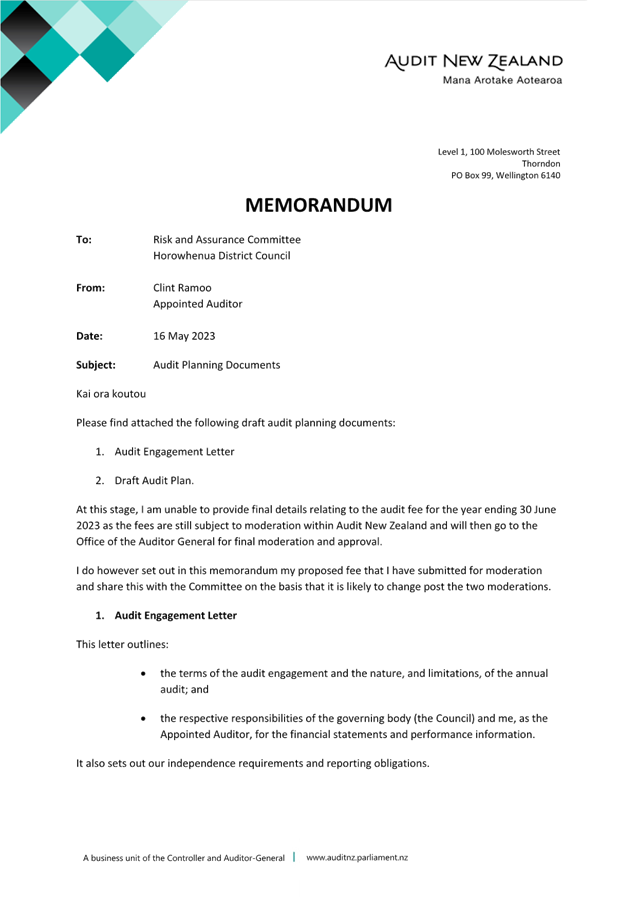
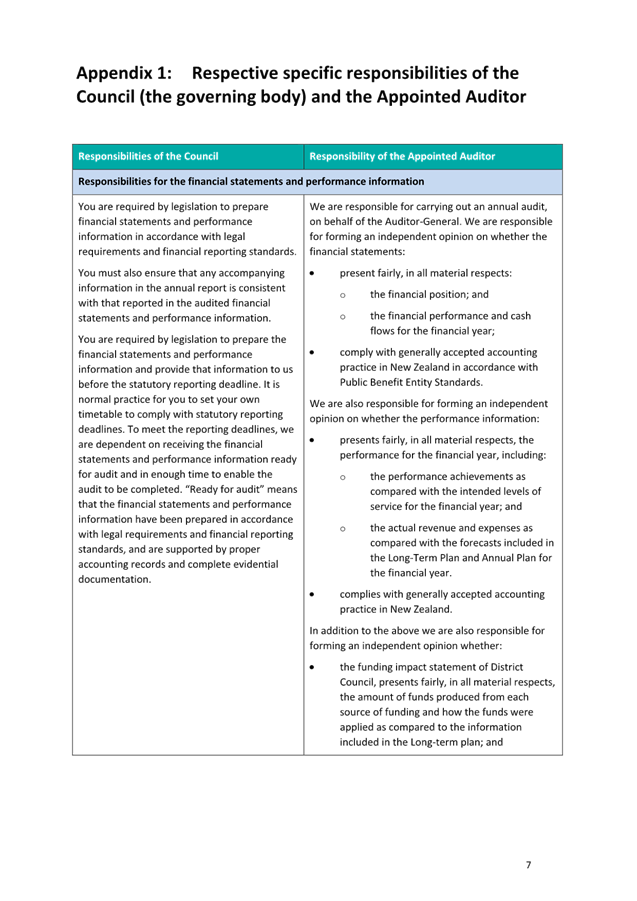
6.1 Audit Management Letter, Engagement letter
and Audit plan for 2022/23 Annual Report
File No.:
23/369
1. Purpose
1.1 This
report is to present to the Risk and Assurance Committee the Audit management
letter for the 2021/22 year and the engagement letter and audit plan for the
2022/23 Annual Report.
2. Recommendation
2.1 That Report
23/369 Audit Management Letter, Engagement letter and Audit plan for 2022/23
Annual Report be received.
2.2 That this
matter or decision be recognised as not significant in terms of s76 of the
Local Government Act 2002.
2.3 That the
Audit and Risk Committee agree to joining the Council meeting on 25 October,
2023 to review and adopt the Annual Report for 2022/23, noting that this will
provide greater opportunity for the report to be adopted prior to 31 October,
2023.
3. Issues for Consideration
Audit
Management Letter
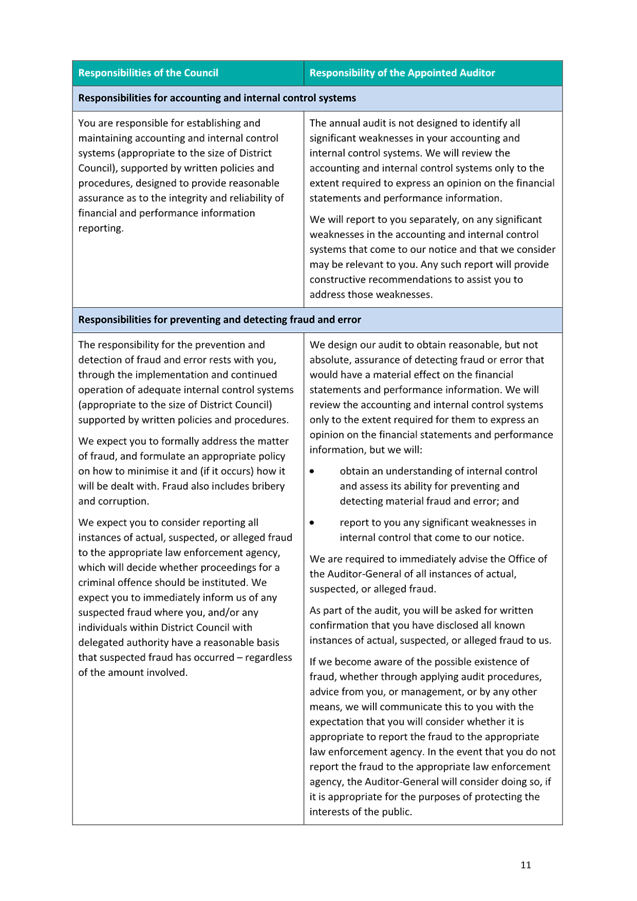
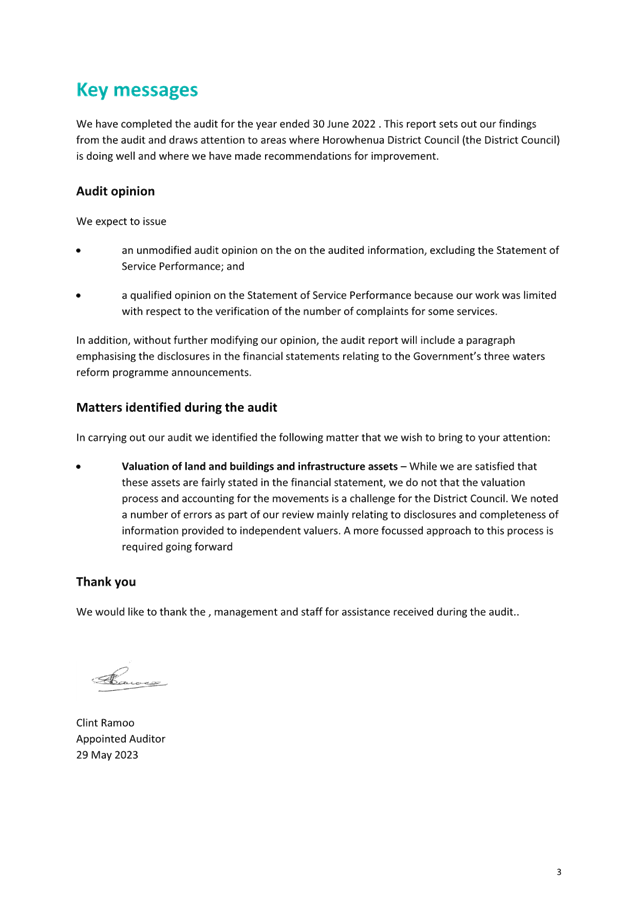
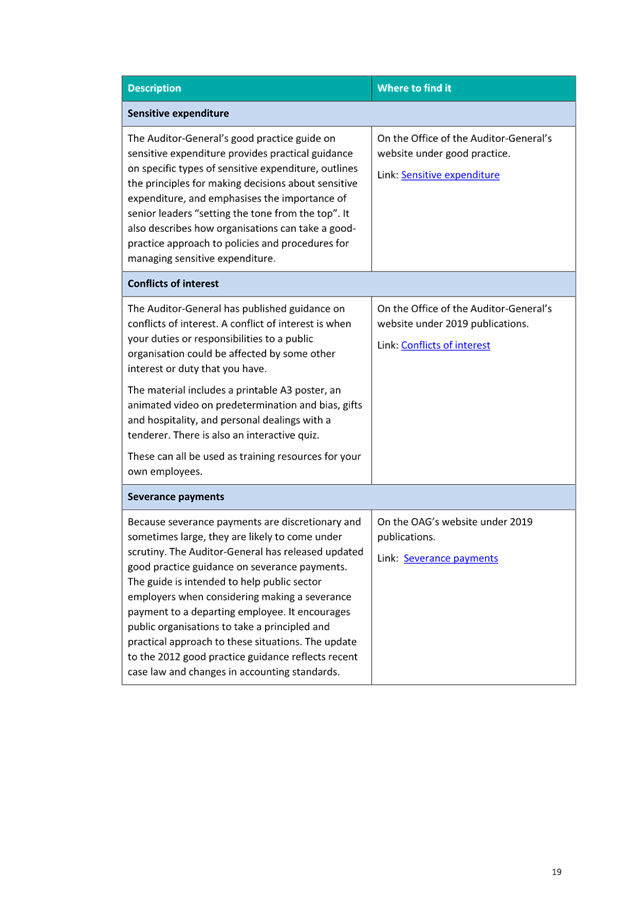
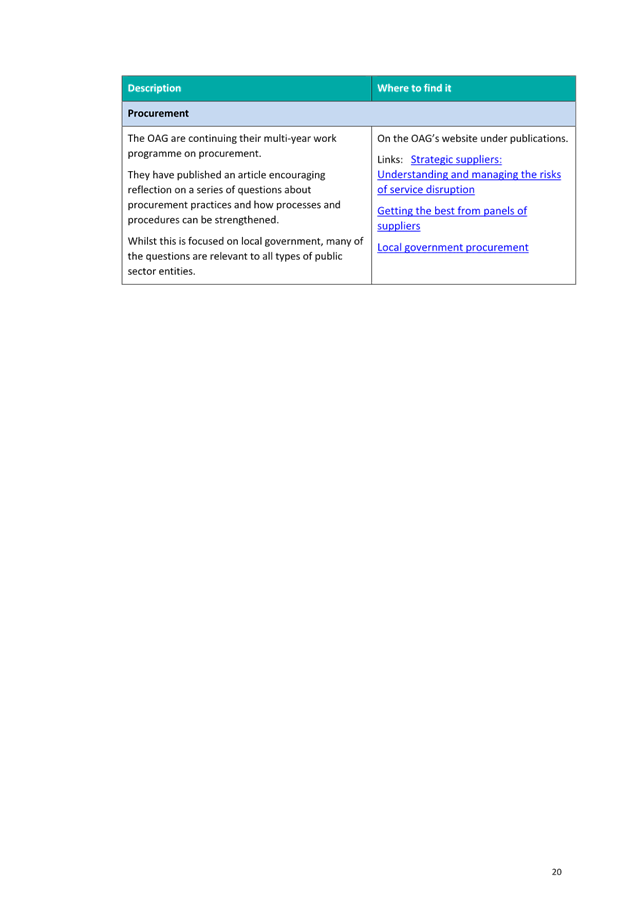
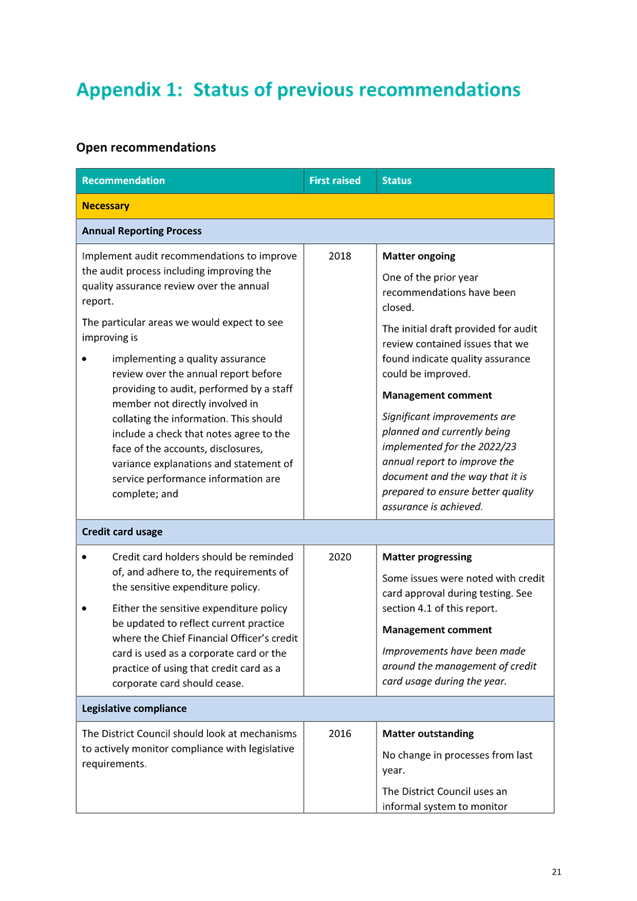
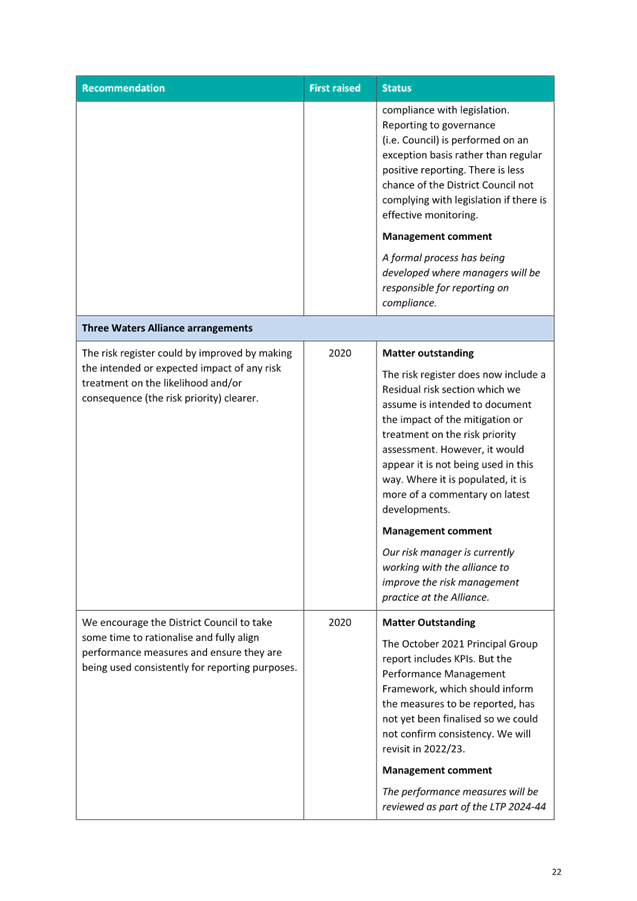
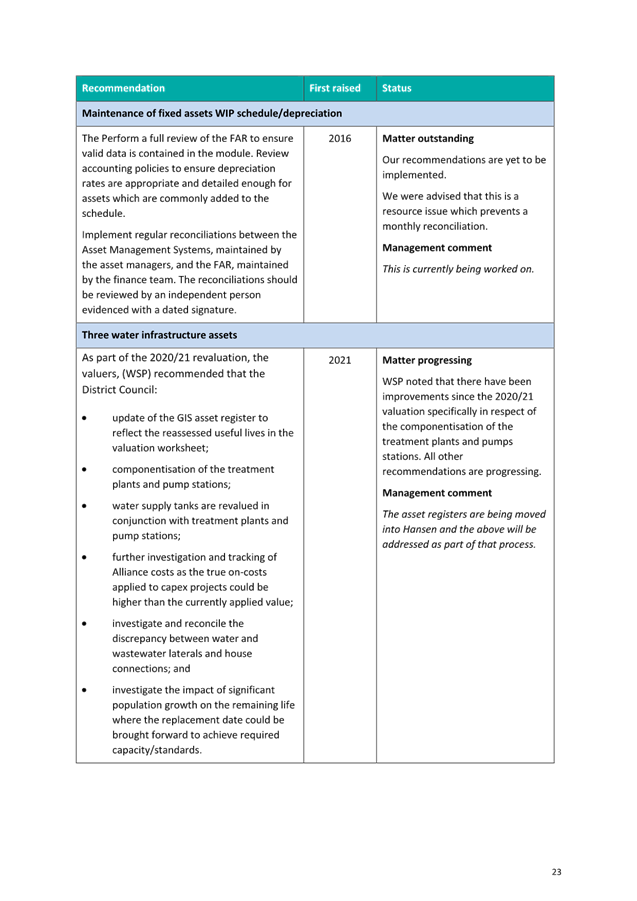
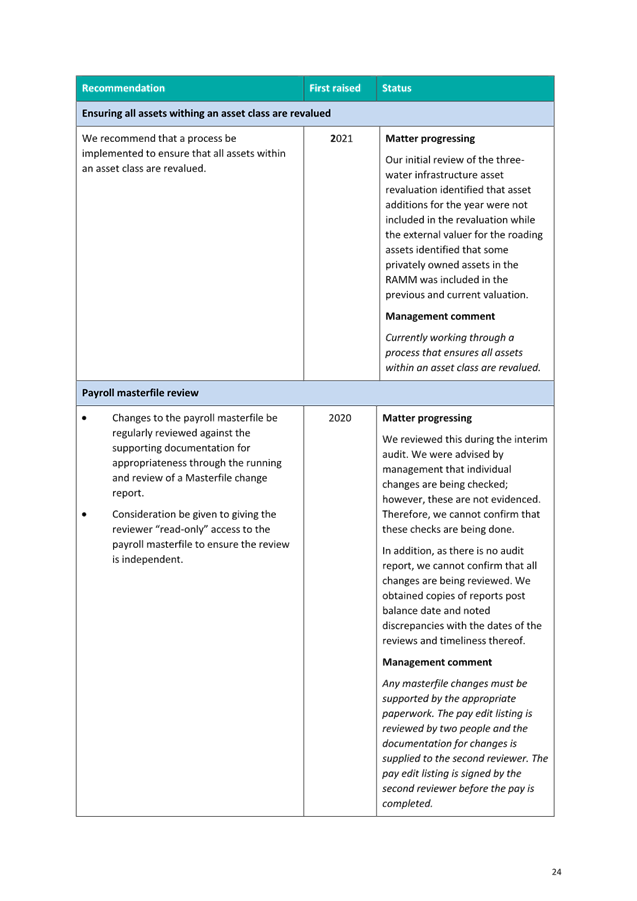
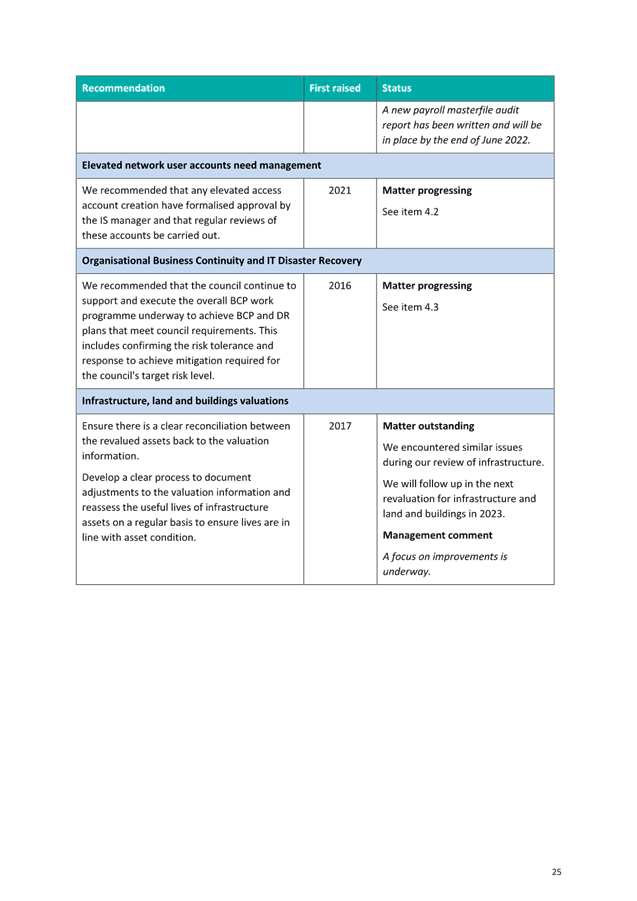
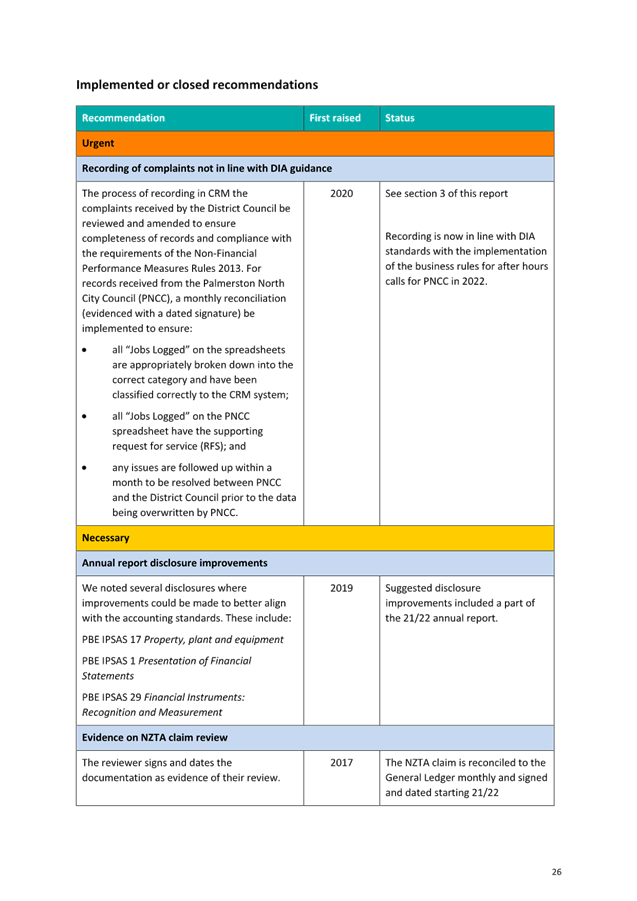
3.1 A
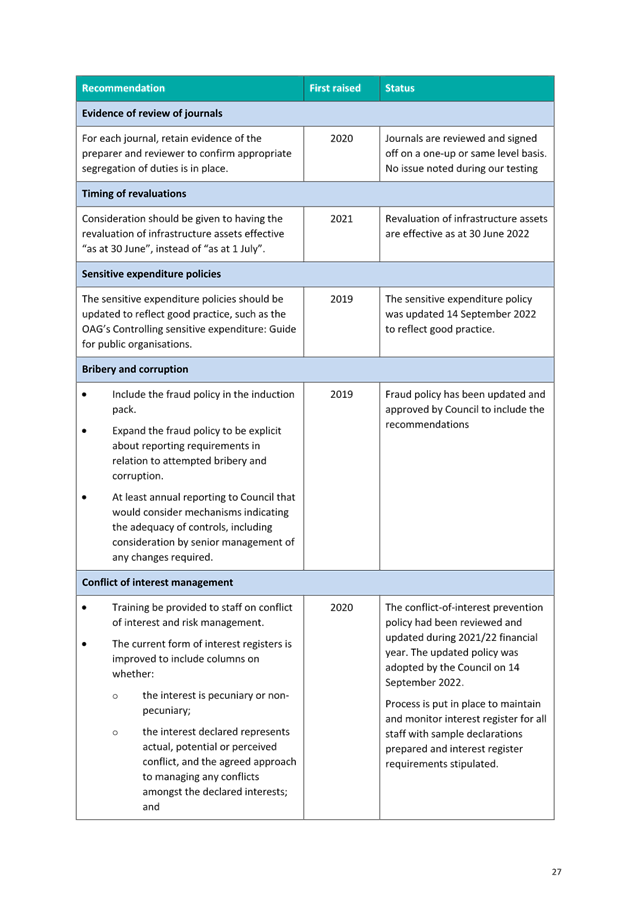
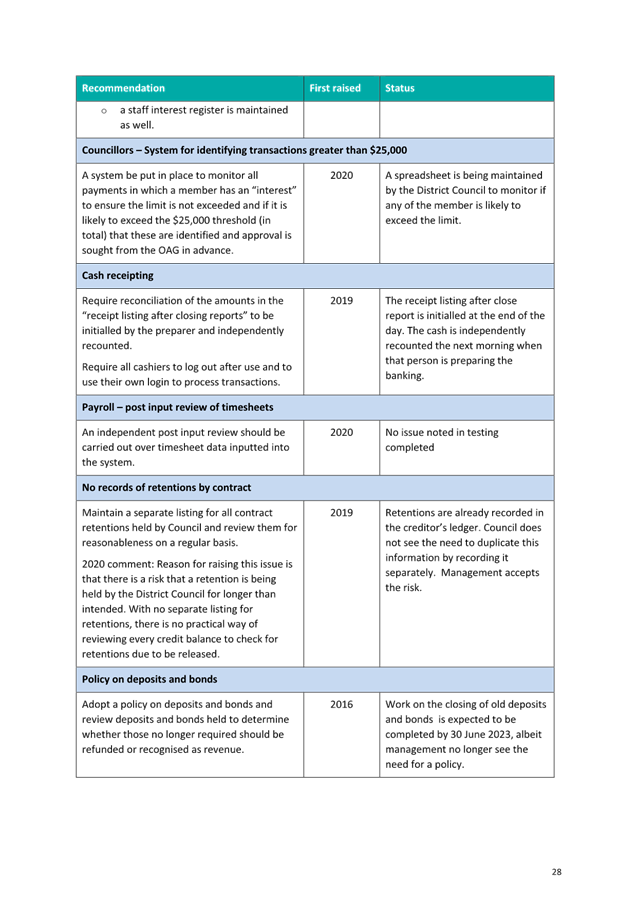
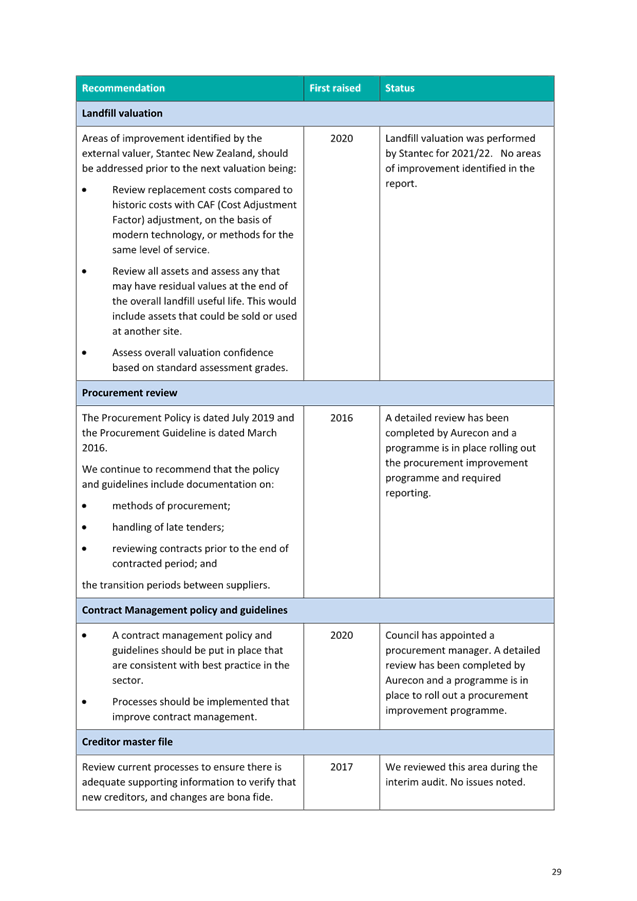
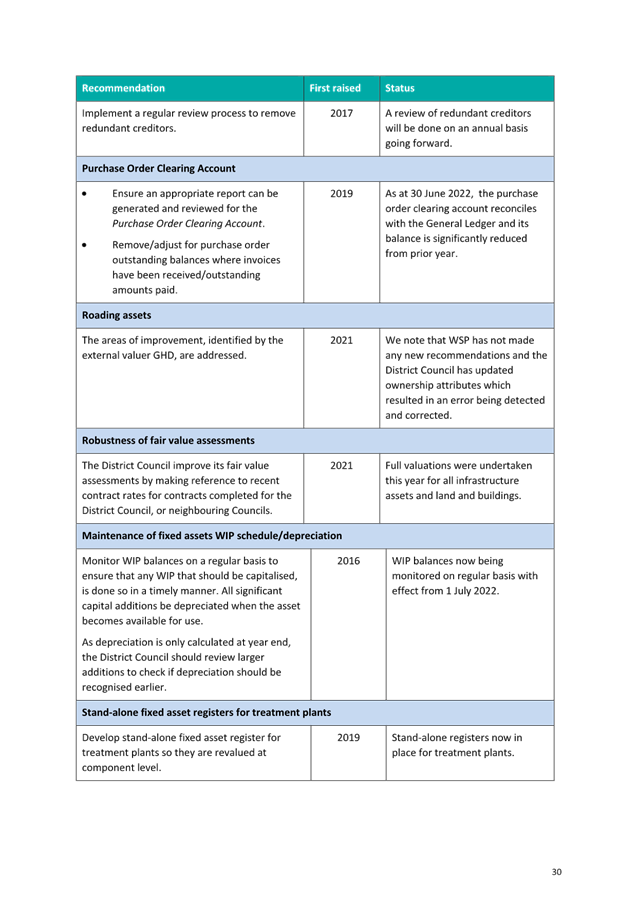
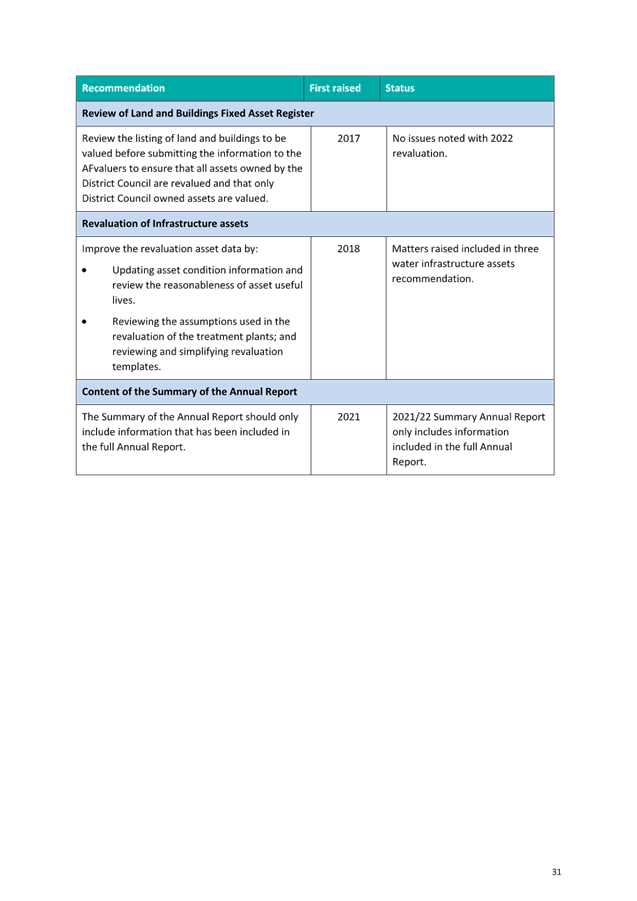
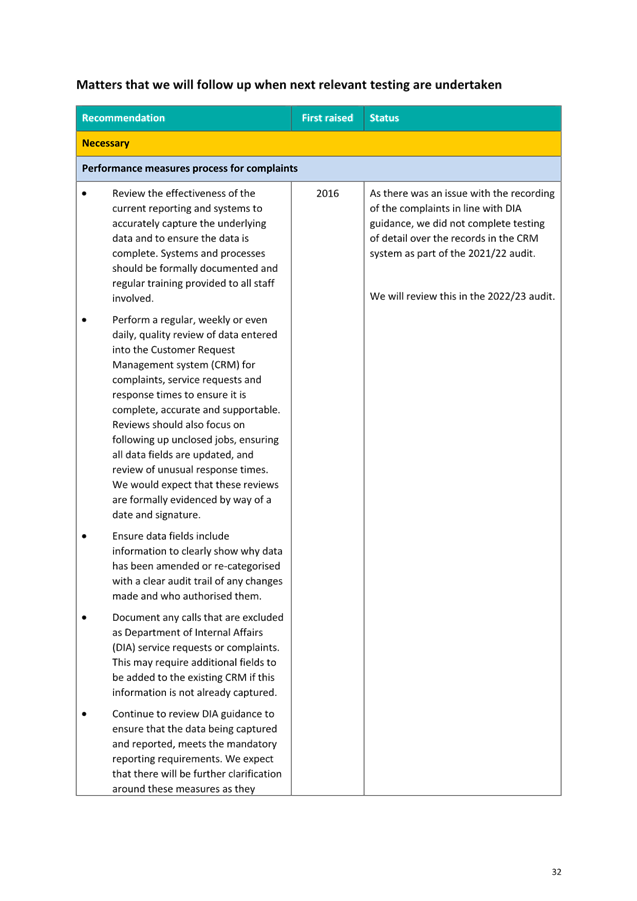
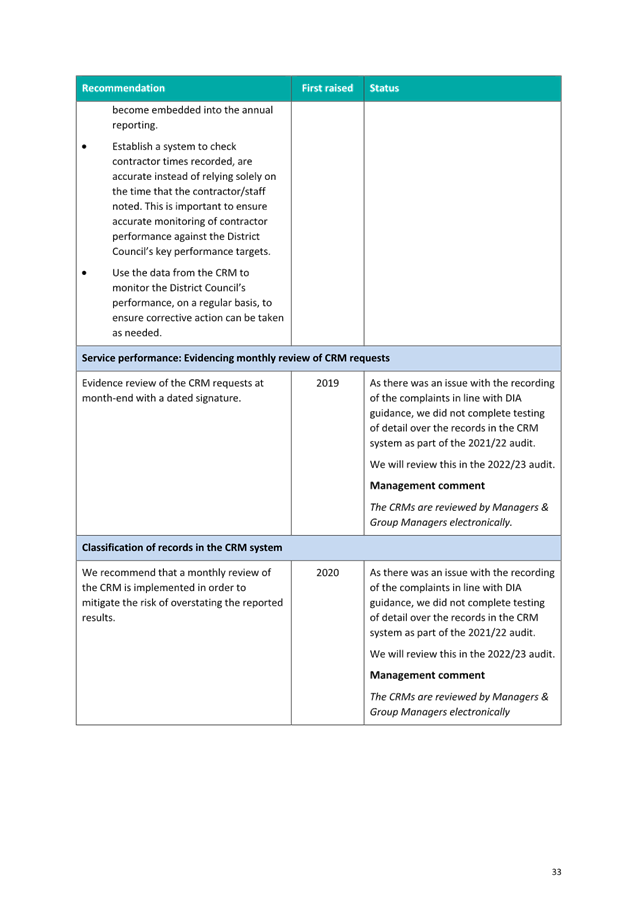
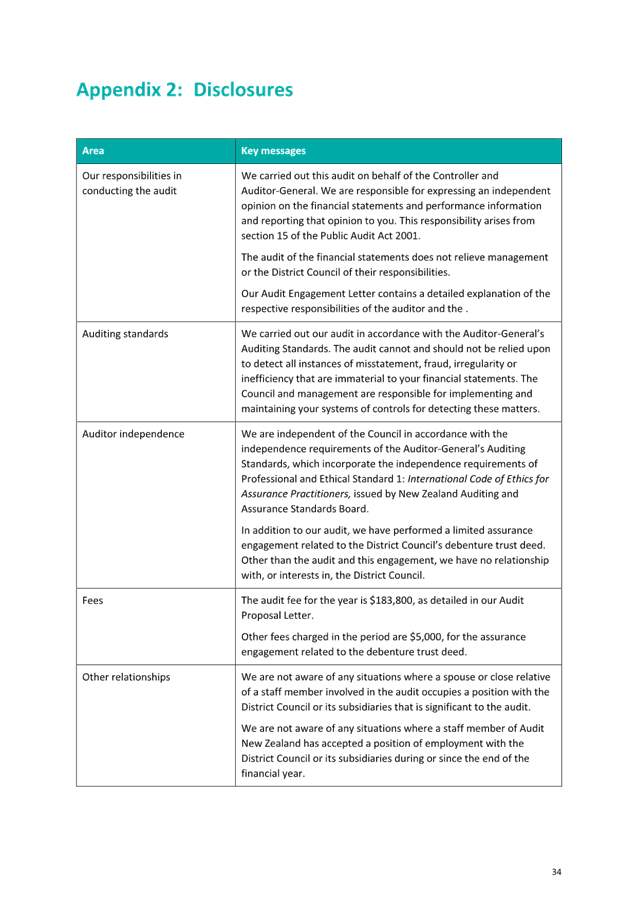
copy of the draft management letter is included in Appendix D. It is in line
with the presentation that the Committee received from our Audit Director when
the Annual Report was presented. The points cleared by audit during this annual
report have been cleared from the monitoring report.
Audit
Engagement Letter
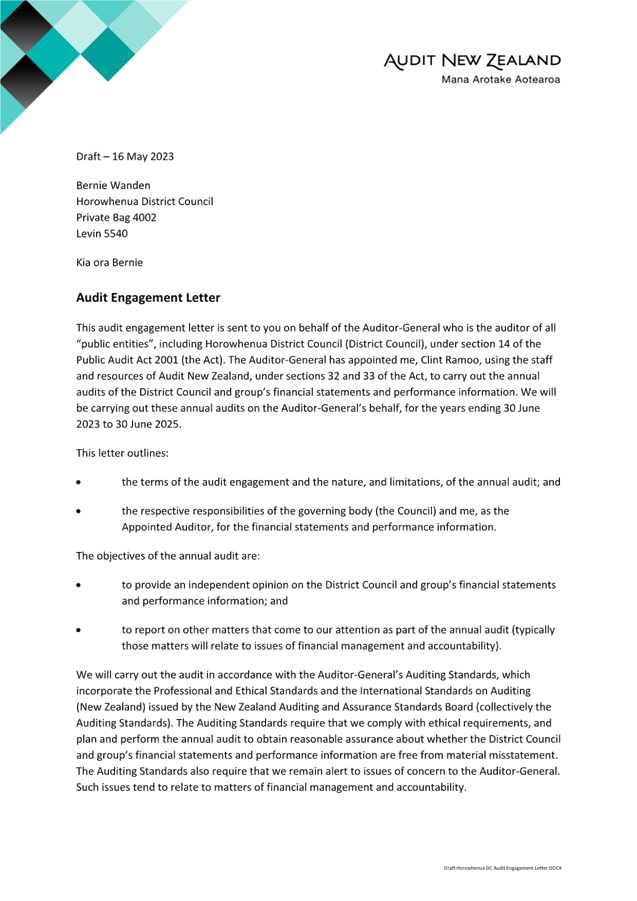
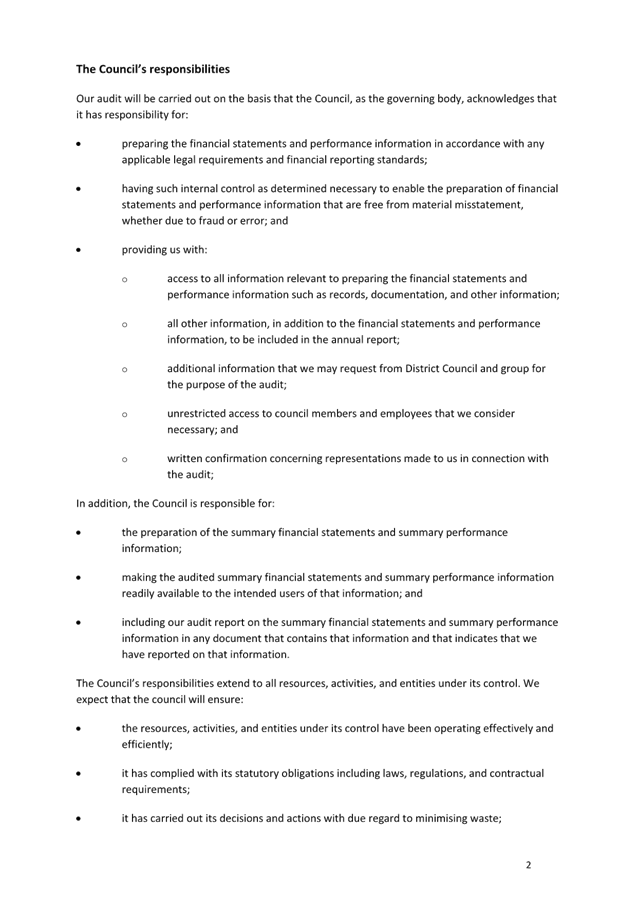
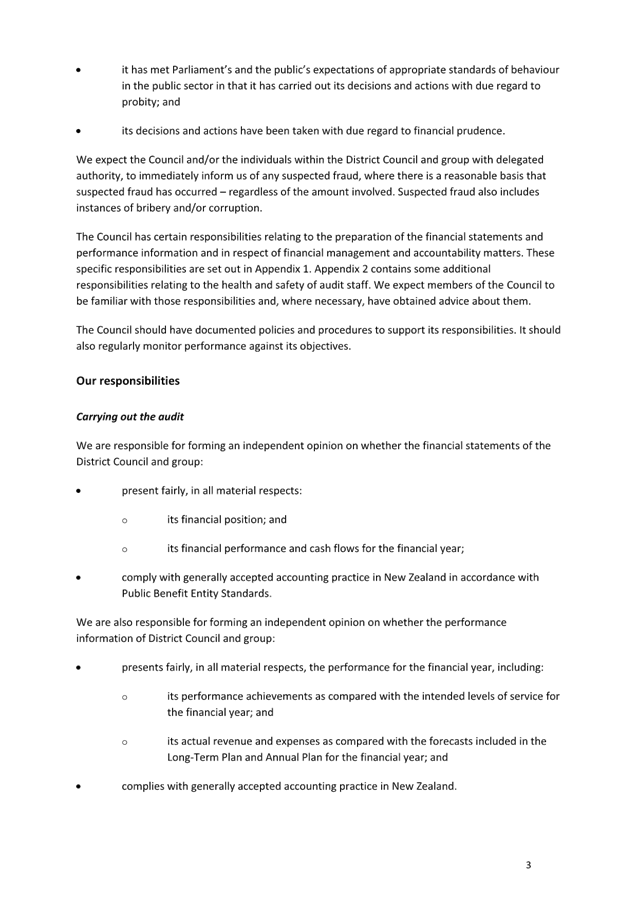
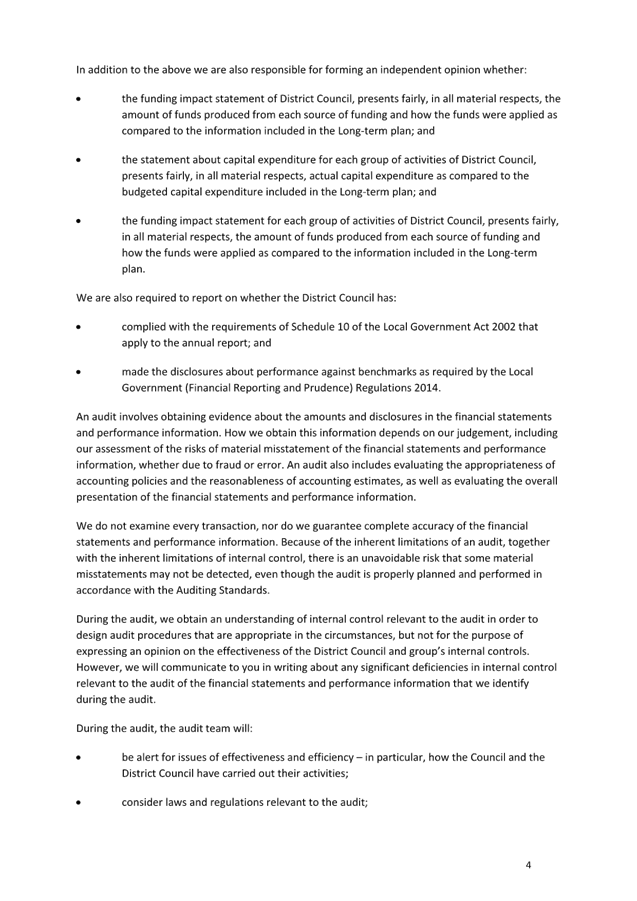
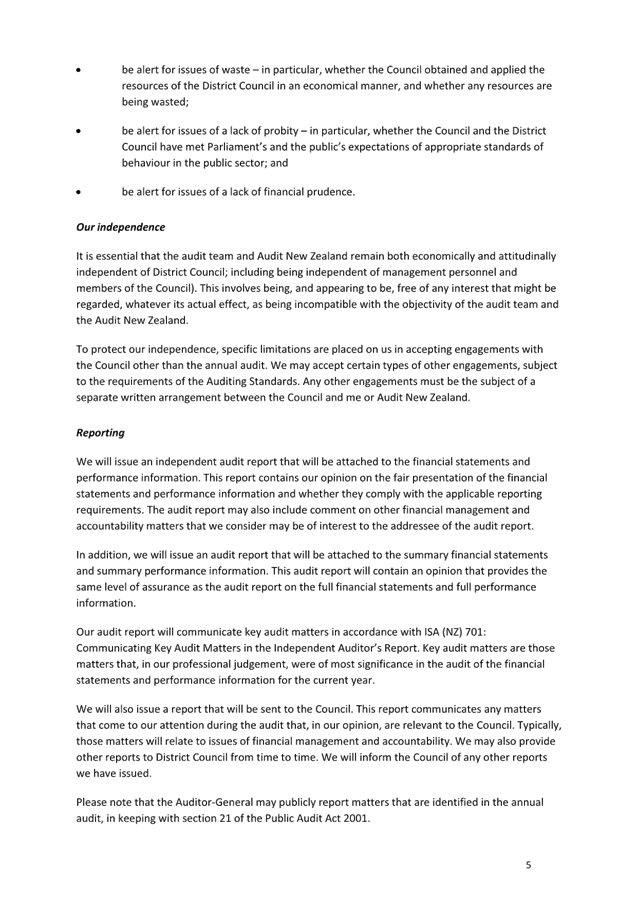
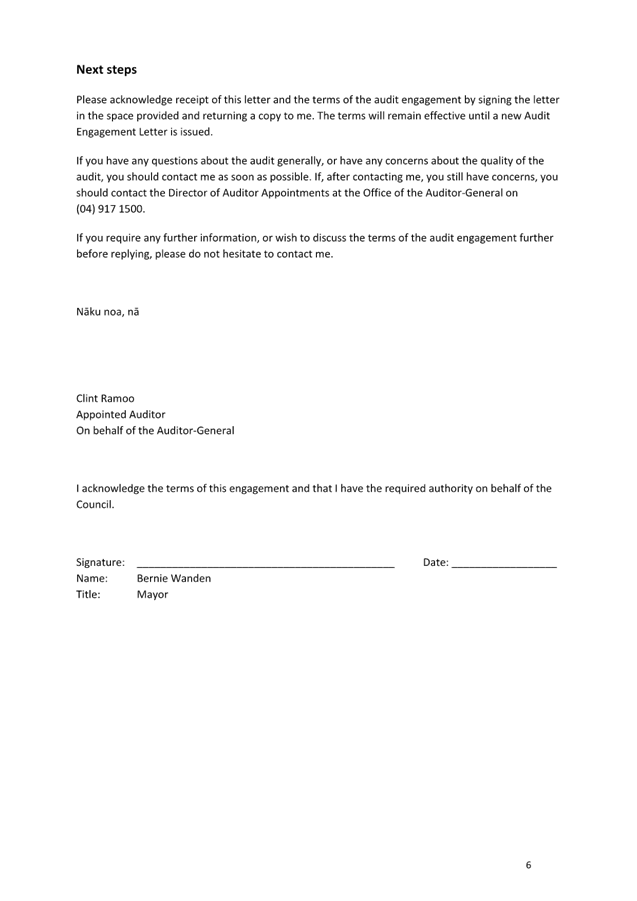
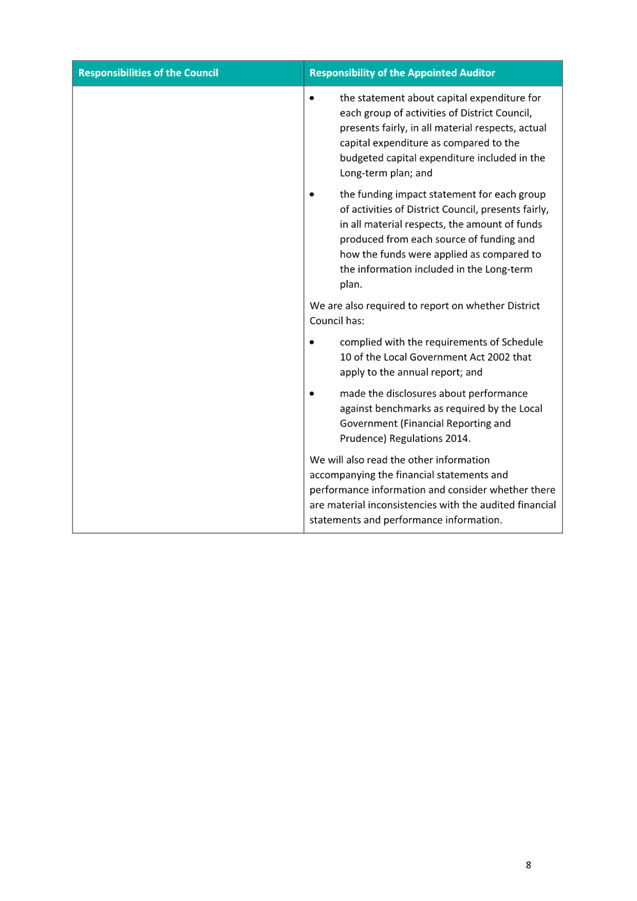
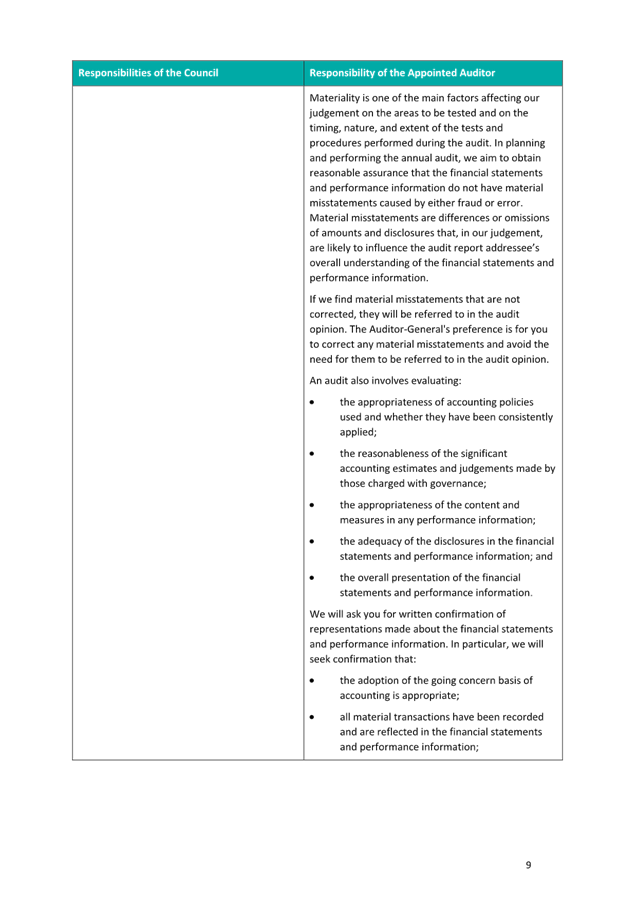
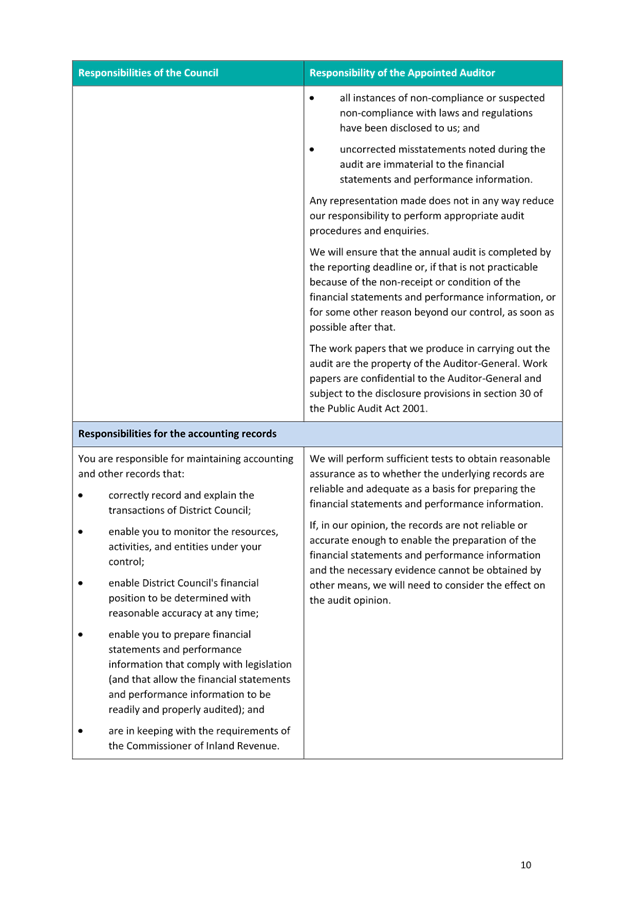
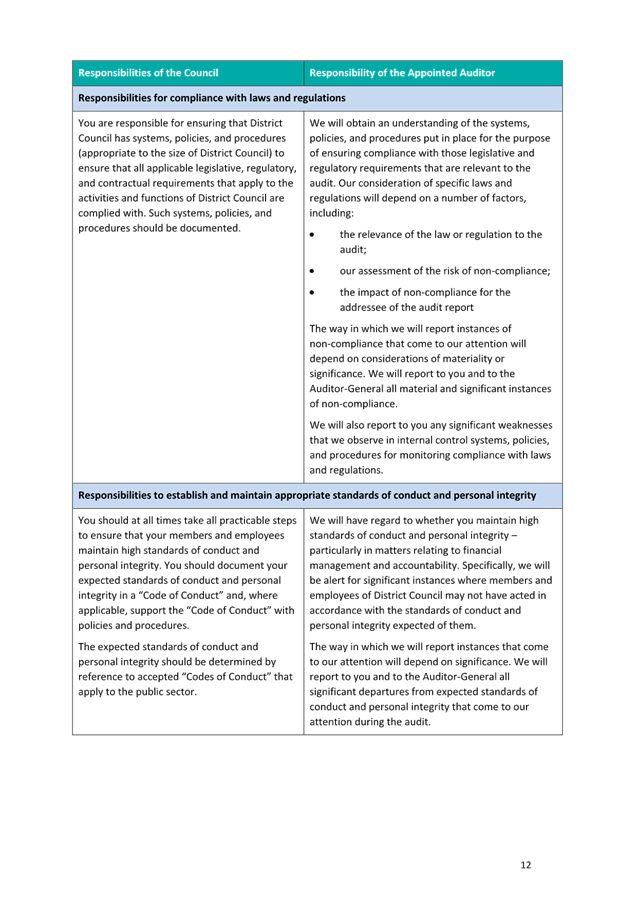
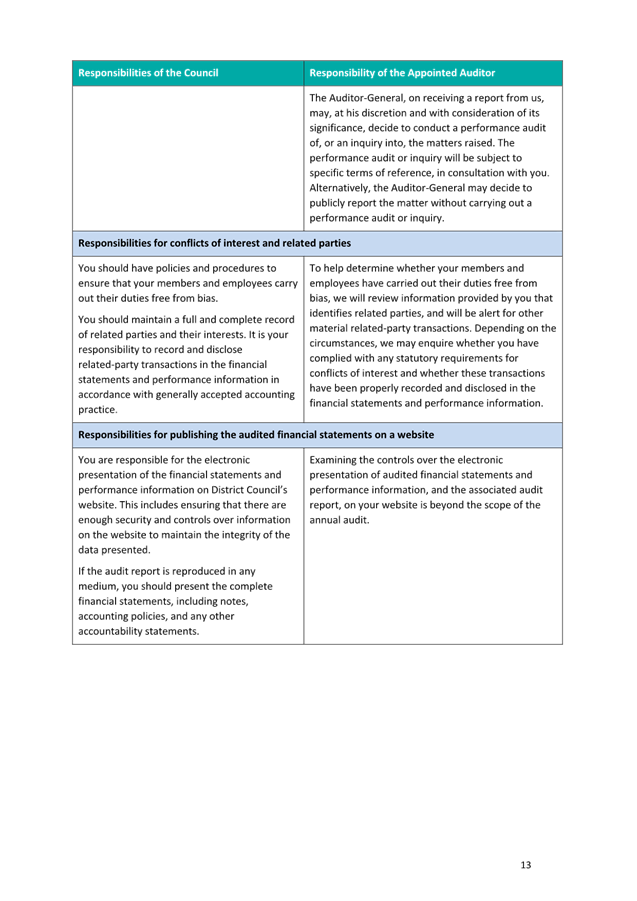
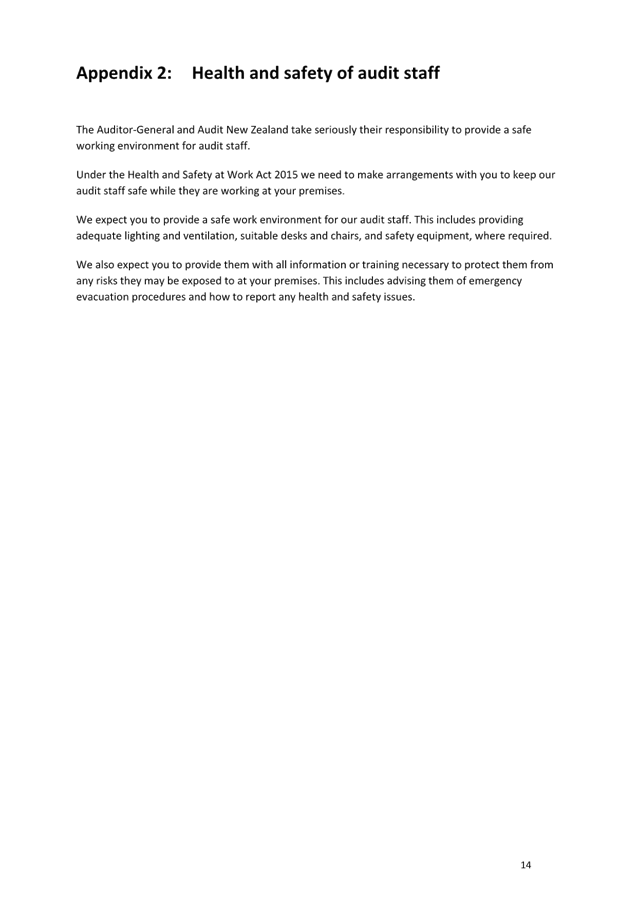
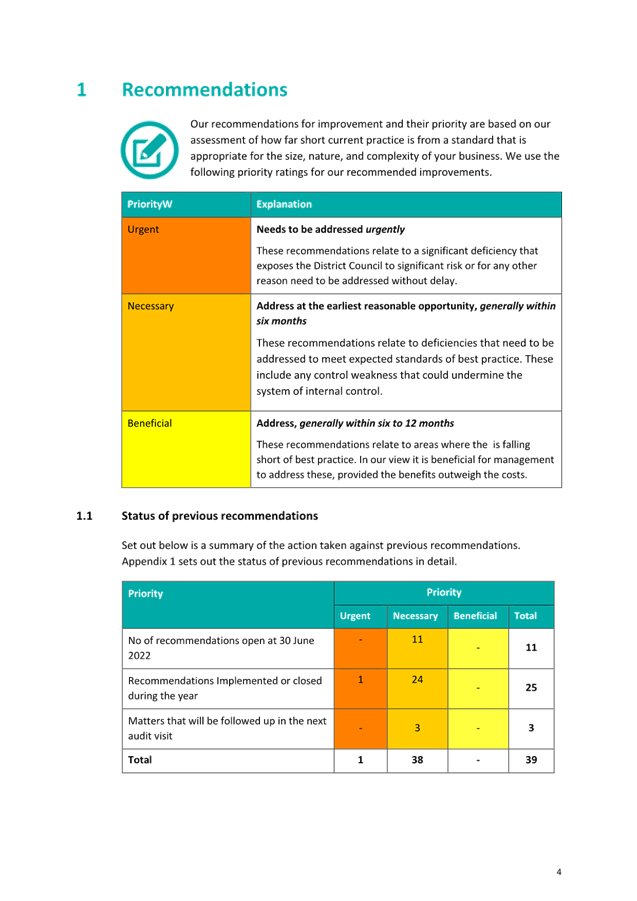
3.2 Audit
New Zealand have provided the engagement letter for the 2022/23 Financial Year.
This is included in Appendix B.
Audit
Fee
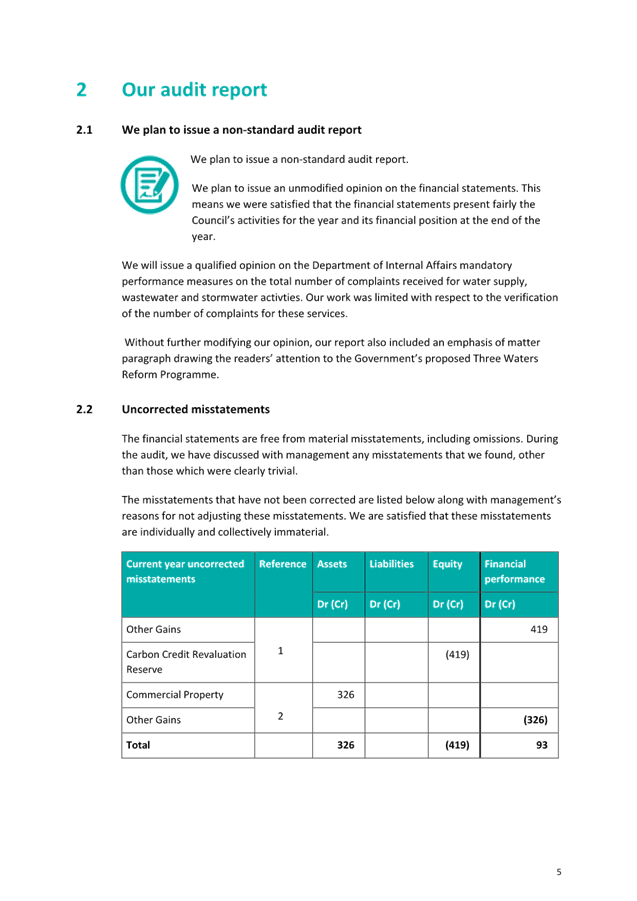
3.3 Audit
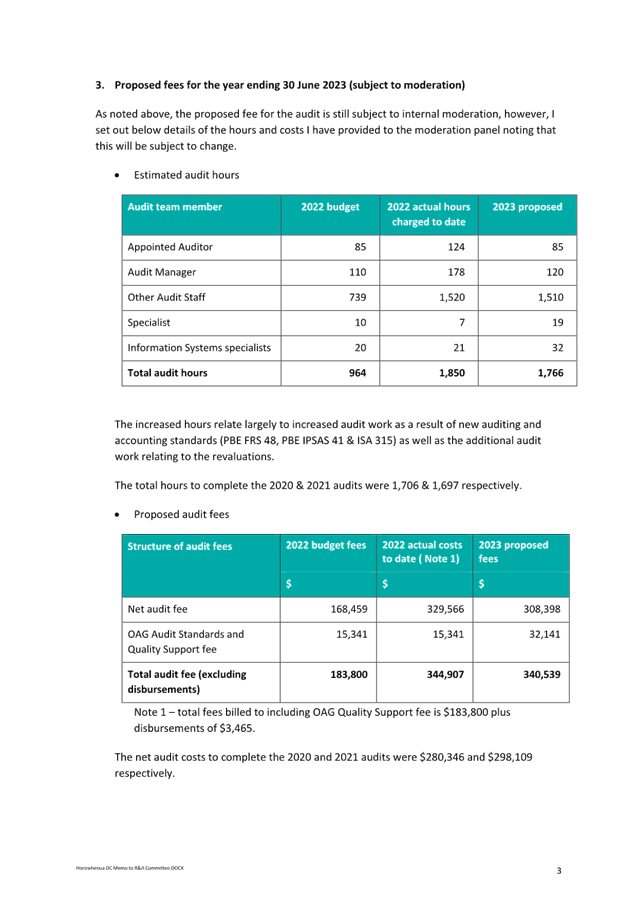
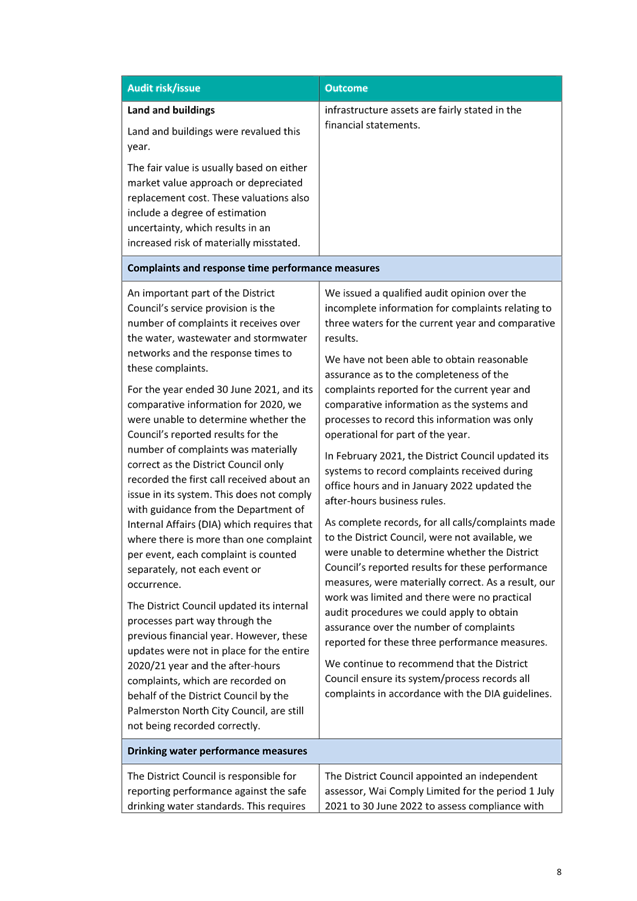
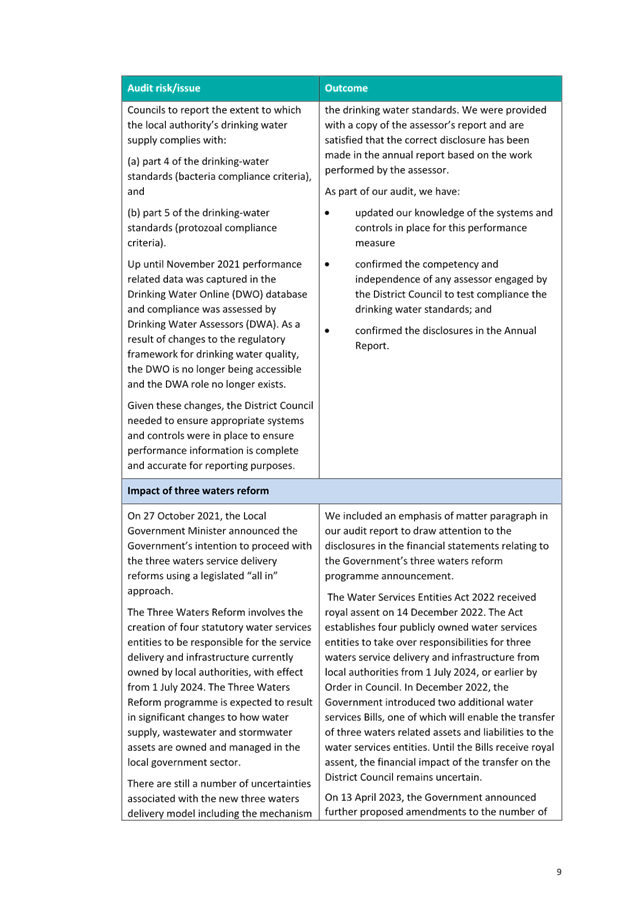
New Zealand have also recently begun a review of the 2022/23 proposed fees and
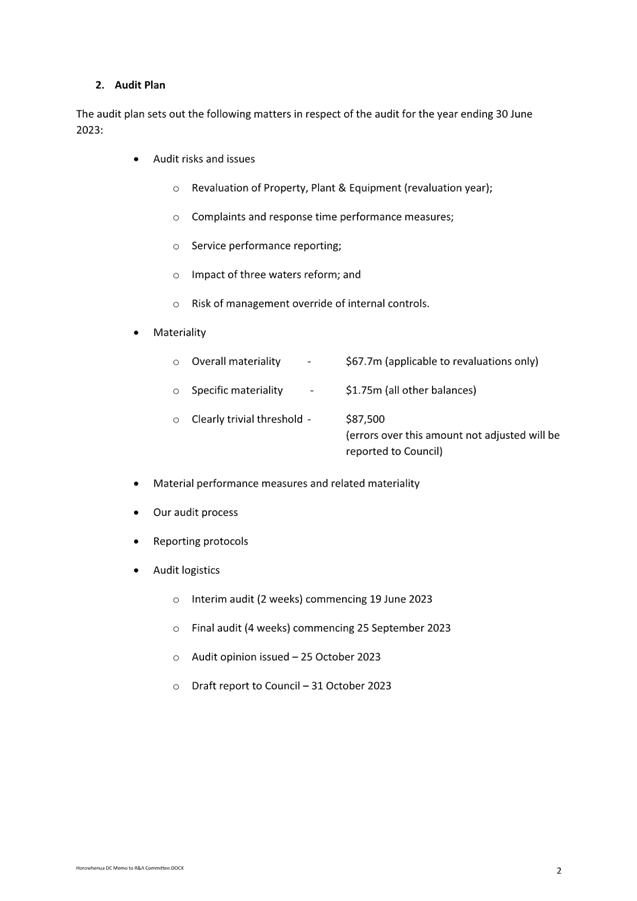
have provided an early indication that it could be as high as $340,000. This
compares to $194k for 2021/22. Appendix A includes a table outlining the
proposal.
Audit
Plan
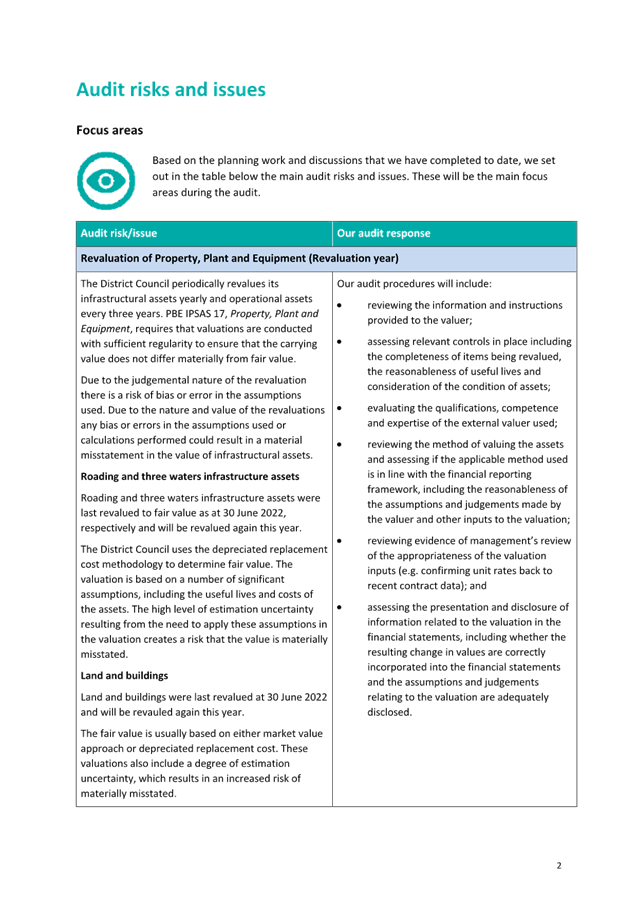
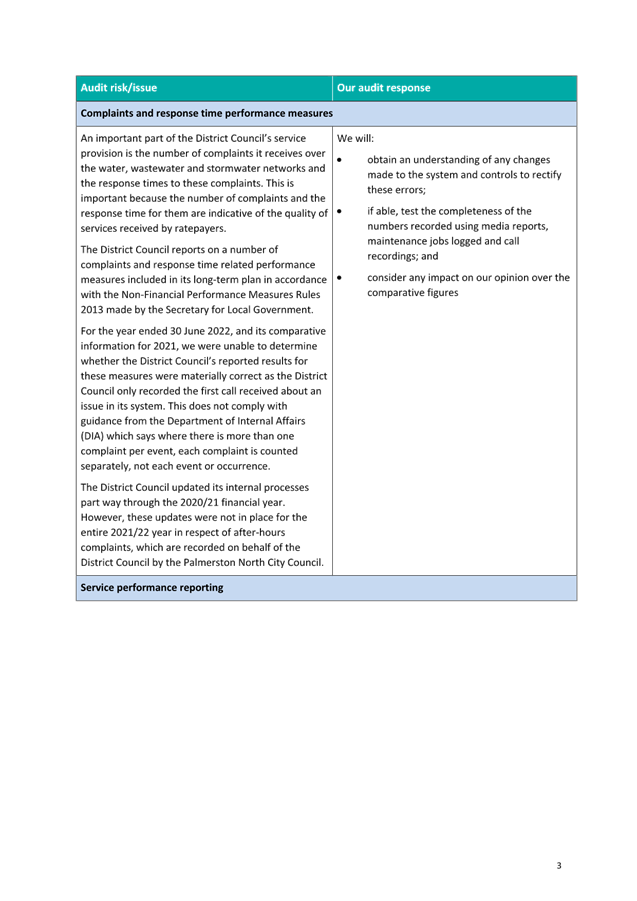
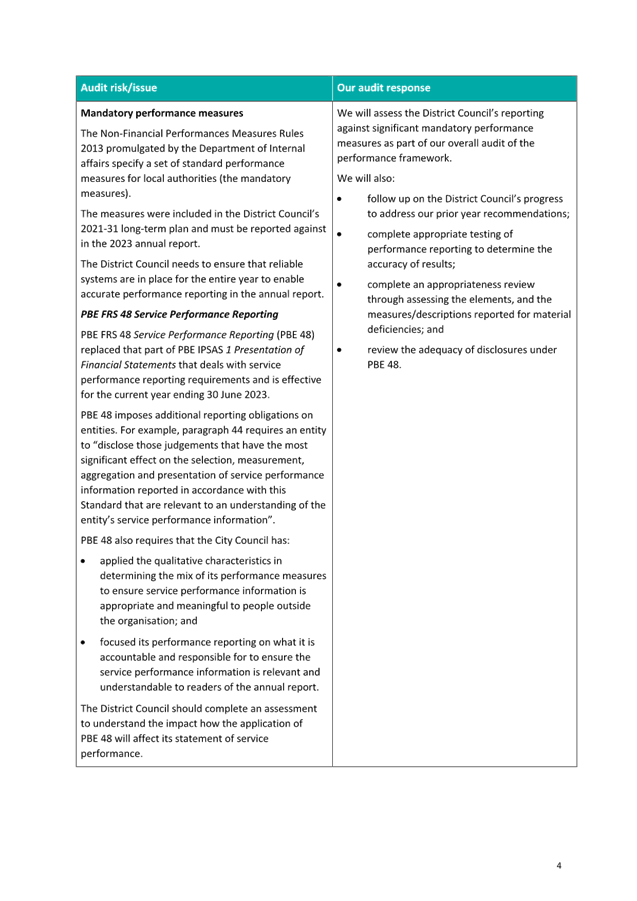
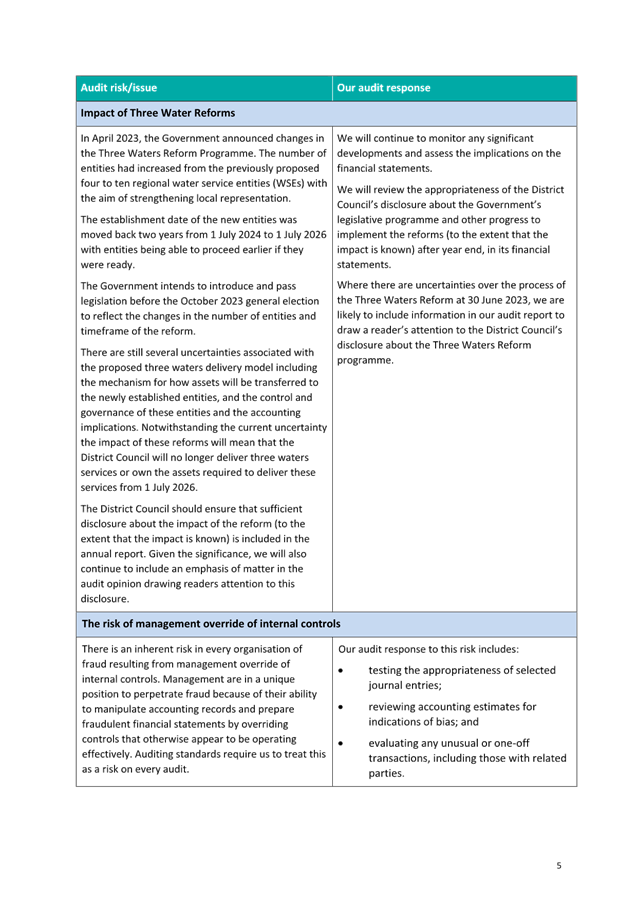
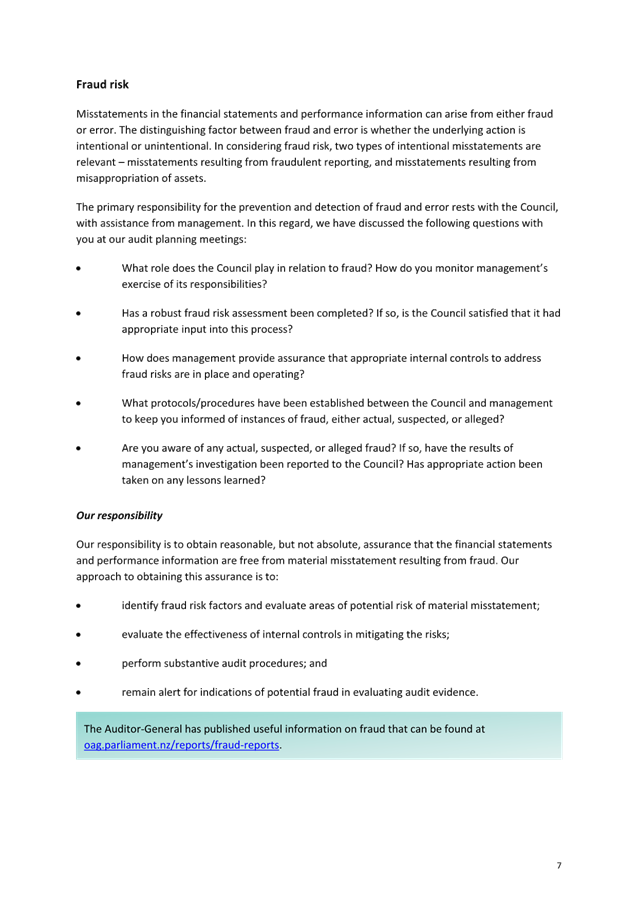
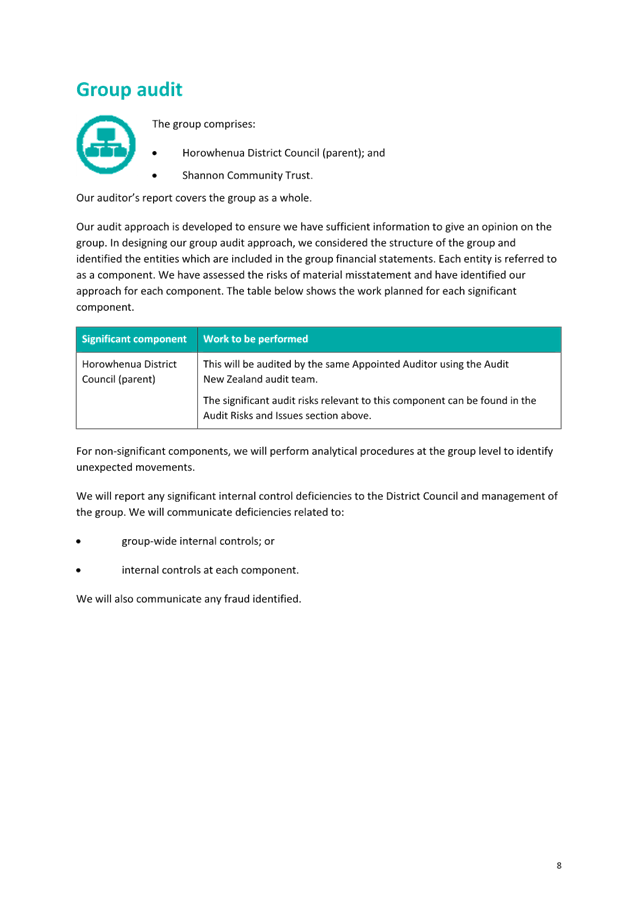
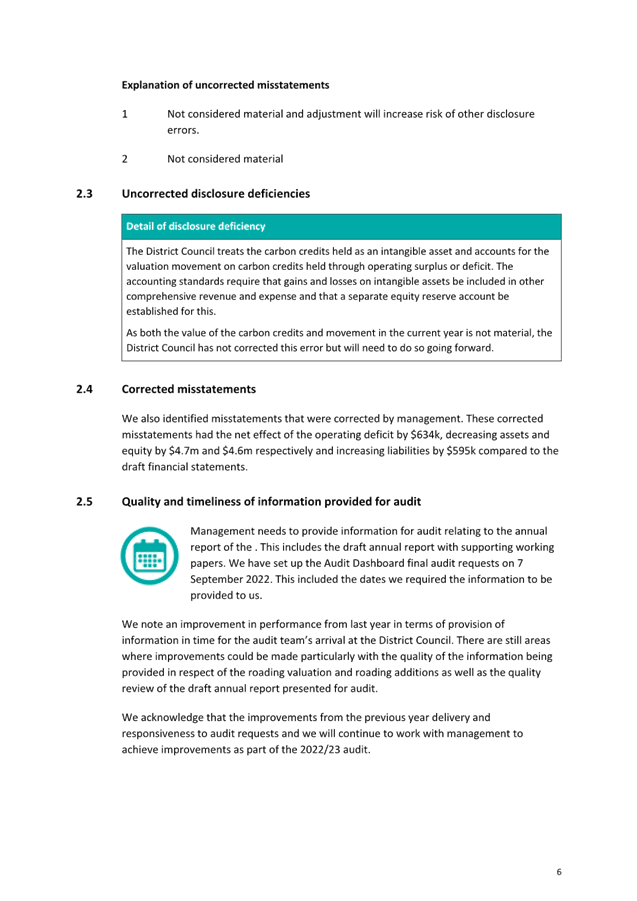
3.4 Audit
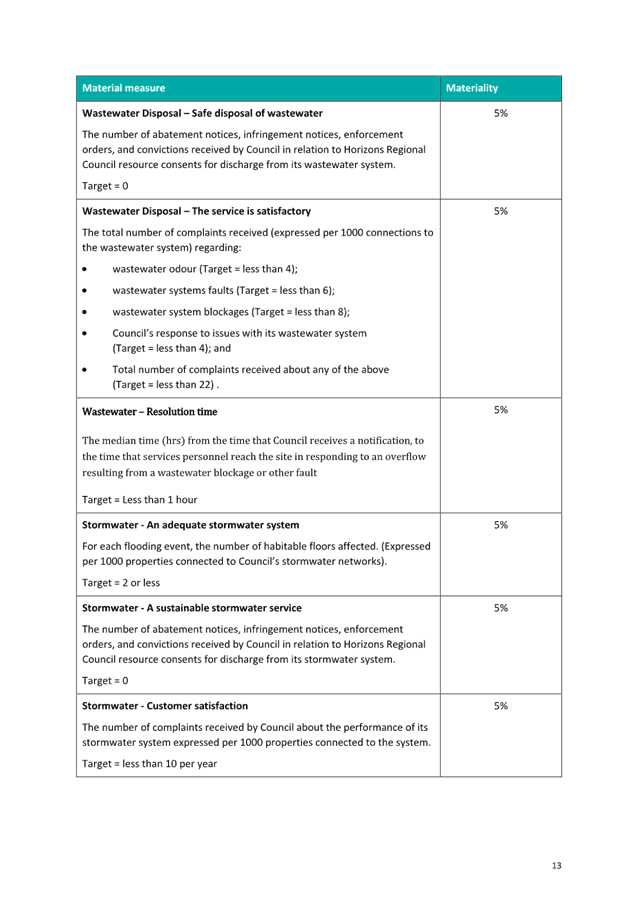
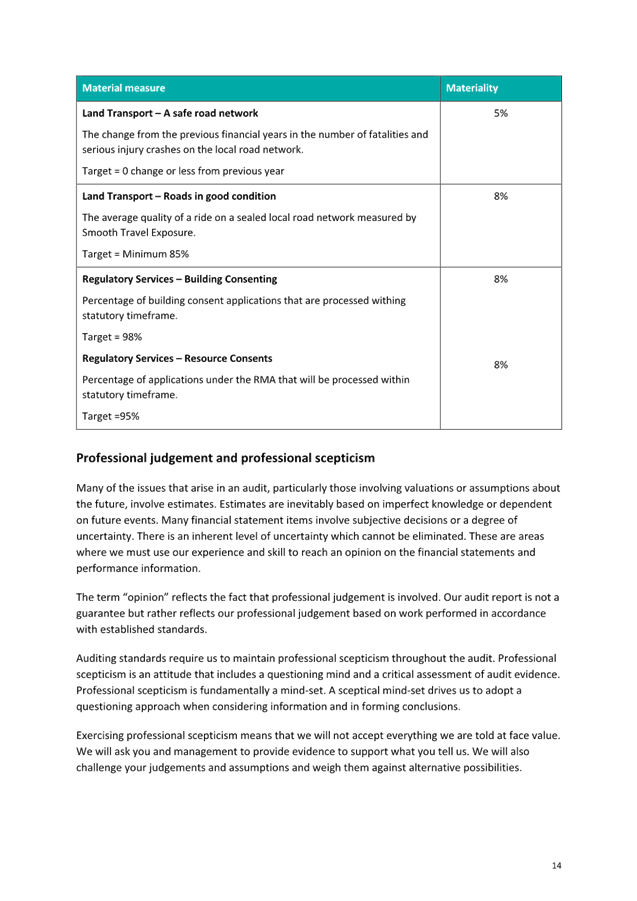
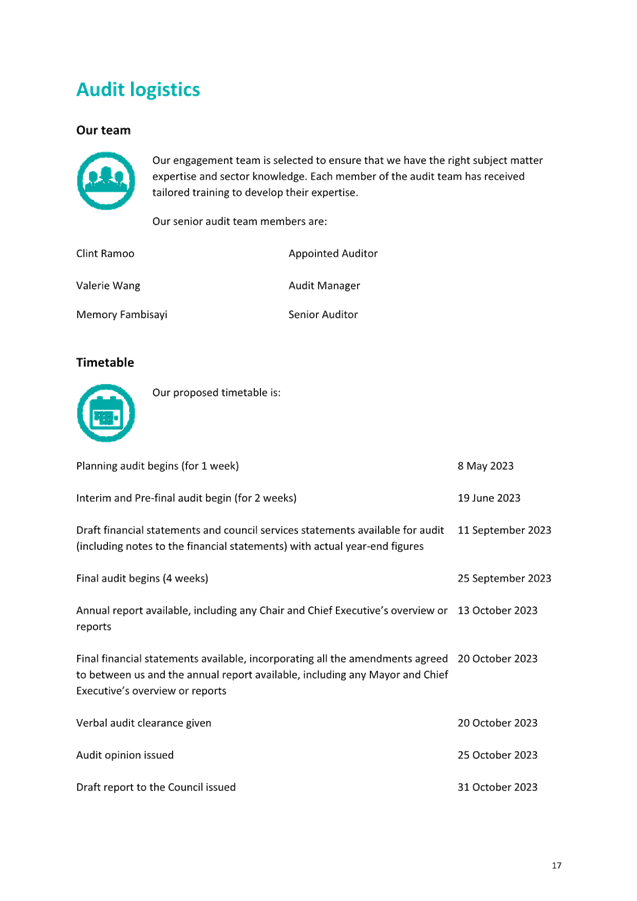
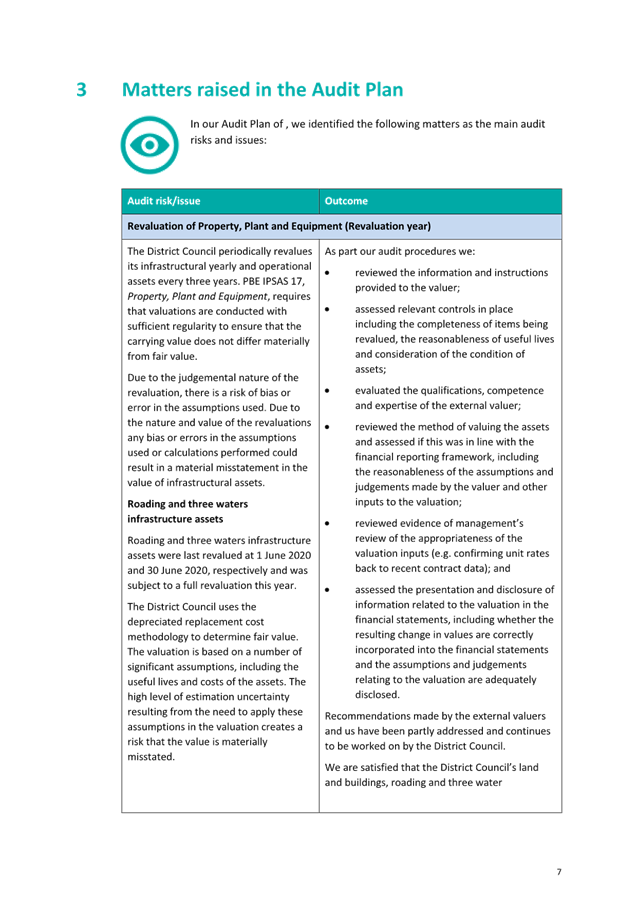
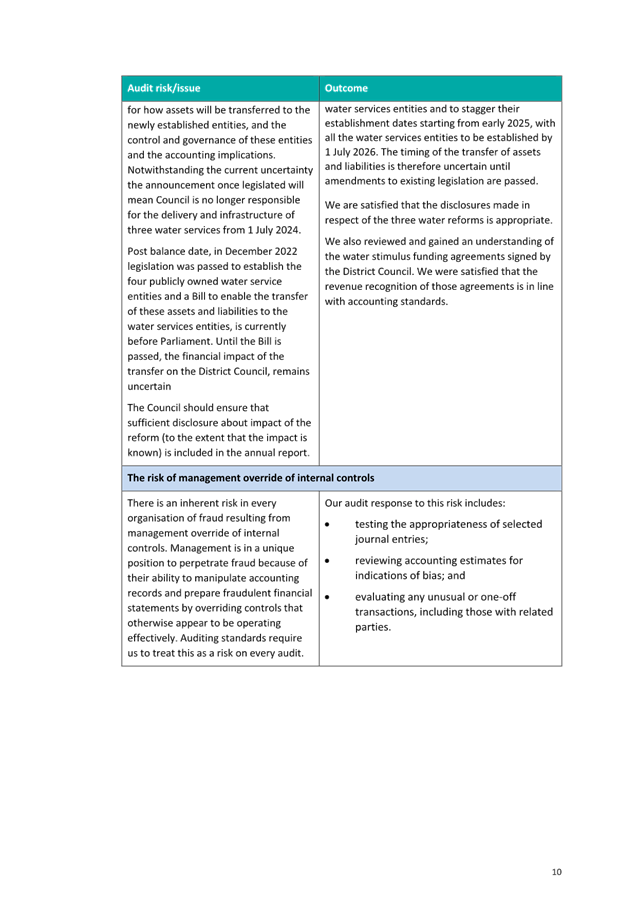
New Zealand’s overall Audit Plan is included within a summary of the
proposed timing that is included below. It is important to note that this plan
includes an assumption that the Council will need to revalue our three waters,
roading and land and building assets again for this financial year.
3.5 This
is a significantly costly exercise both in officer time, contracting external
valuers and auditor time to review. Officers are currently completing a high
level review of how assets values have changed (fair value assessment) to
determine if it is necessary to revalue the assets again.
Audit
Timing
3.6 In
preparation for the 2022/23 Annual Report, officers have been working with
Audit New Zealand to ensure that the Annual Report is adopted before the 31
October statutory deadline. This is proving difficult to meet as resources for
the audit have yet to be confirmed, and the focus of effort for Audit New
Zealand in the first part of September is on Central Government audits.
3.7 The
soonest that Audit New Zealand can agree to provide verbal audit clearance is
20 October 2023. This assumes a standard audit of four weeks.
3.8 While
the extraordinary Council meeting scheduled to adopt the 2022/23 annual report
is on 25 October 2023, this would not allow the reports to be released for the
agenda on 18 October with clearance already provided.
3.9 This
is an unfortunate timeframe that would also require independent members of the
Risk & Assurance Committee to join the Council meeting to review and
discuss the report prior to adoption rather than the standard process of first
taking the report through the Committee.
3.10 Council’s
Audit Director Clint Ramoo has agreed to provide regular updates for the
committee on the status of the audit.
Attachments
|
No.
|
Title
|
Page
|
|
a⇩
|
Memo to R&A Committee from Audit
NZ
|
10
|
|
b⇩
|
Audit Engagement Letter
|
14
|
|
c⇩
|
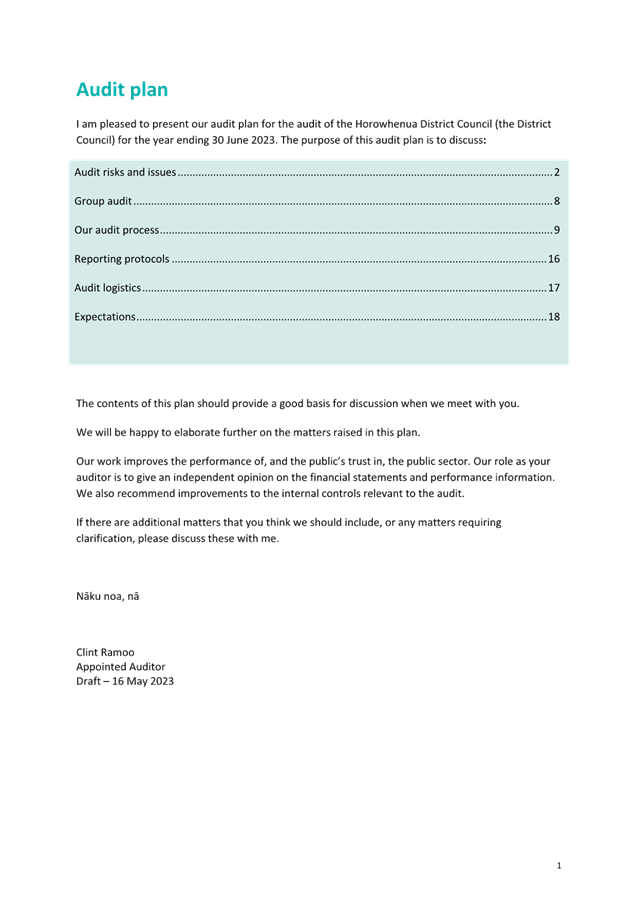
Audit Plan 2023
|
28
|
|
d⇩
|
Audit Management Letter - Final 2022
|
49
|
|
Confirmation of statutory
compliance
In accordance with section 76 of the
Local Government Act 2002, this report is approved as:
a. containing sufficient information about the options
and their benefits and costs, bearing in mind the significance of the
decisions; and,
b. is based on adequate knowledge about, and adequate
consideration of, the views and preferences of affected and interested
parties bearing in mind the significance of the decision.
|
Signatories
|
Author(s)
|
Pei Shan Gan
Financial Controller
|
|
|
Approved by
|
Jacinta Straker
Group Manager Organisation Performance
|
|
|
|
Monique Davidson
Chief Executive Officer
|
|
|
Risk and Assurance Committee
07 June 2023
|

|

|
Risk and Assurance Committee
07 June 2023
|

|
|
Risk and Assurance Committee
07 June 2023
|

|

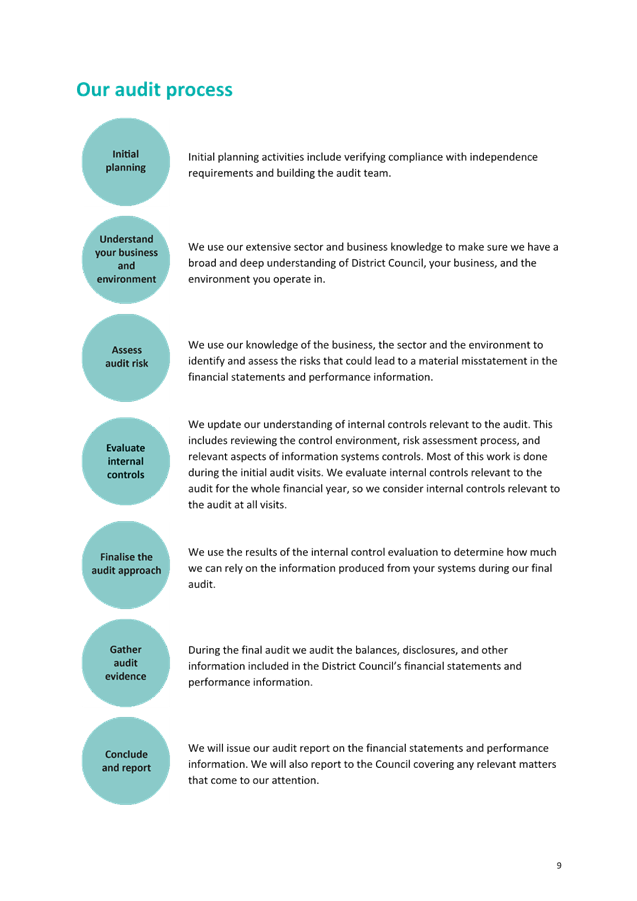
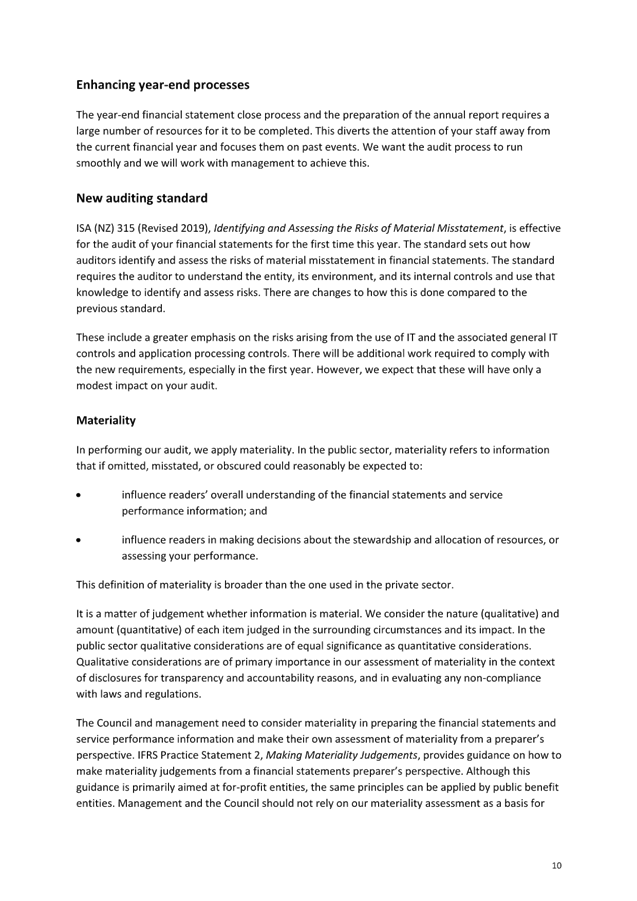
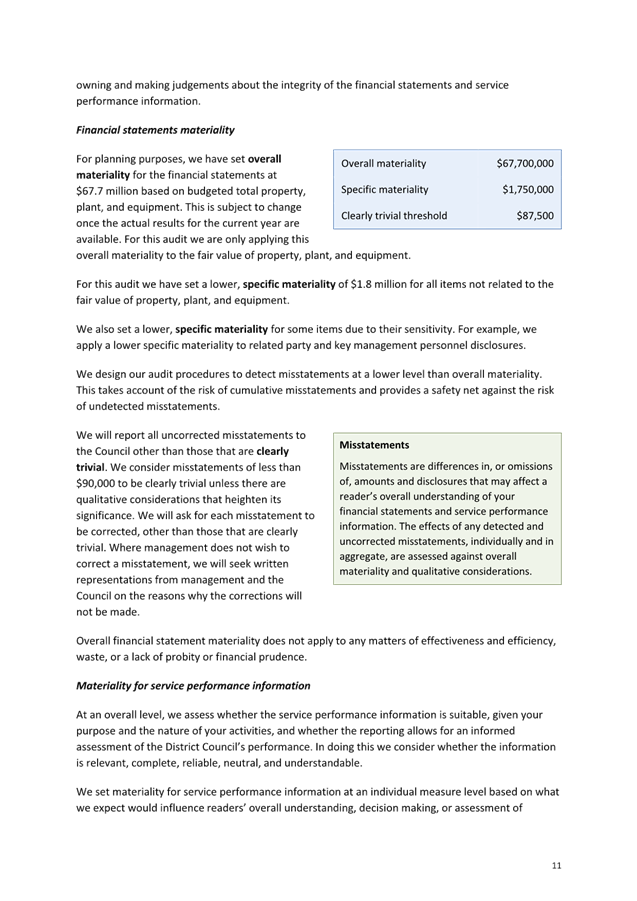
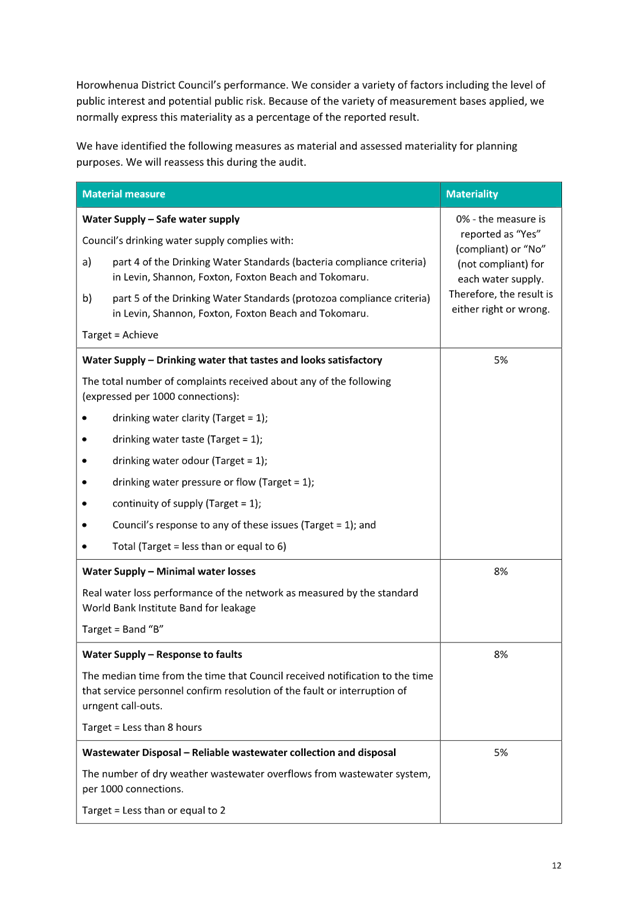


|
Risk and Assurance Committee
07 June 2023
|

|

|
Risk and Assurance Committee
07 June 2023
|

|
6.2 Treasury Report for the March 2023 quarter
File No.:
23/333
1. Purpose
1.1 To
present to the Risk and Assurance Committee the Bancorp Treasury Reporting
Dashboard for the March 2023 quarter.
2. Recommendation
2.1 That Report
23/333 Treasury Report for the March 2023 quarter be received.
2.2 That this
matter or decision be recognised as not significant in terms of s76 of the
Local Government Act 2002.
3. Background/Previous Council Decisions
3.1 This
quarterly Treasury Reporting Dashboard is produced by Council’s Treasury
Advisors, Bancorp Treasury Services Limited, for the benefit of Executive
Leadership Team, Council and the Risk and Assurance Committee.
3.2 Standard
and Poor’s visited the Council and the Risk and Assurance Committee
during May as part of the annual ratings review. We are expecting to receive
our updated rating on 1 June 2023.
4. Issues for Consideration
4.1 Council
had $144m of current external debt as at 31 March 2023, comprised of Commercial
Paper (CP), Fixed Rates Bonds (FRBs) and Floating Rates Notes (FRNs), all
sourced from the Local Government Funding Agency (LGFA).
4.2 Cost
of funds as at 31 March 2023 was 3.78%. Interest rates had a very volatile
quarter, driven largely by swings in offshore markets. Officers work closely
with Council’s Treasury Advisor to manage fixed vs. floating rate cover.
4.3 Since
the last meeting, Council has entered into a new interest rate agreement with
BNZ in April for $10,000,000 starting 20 March 2026 and finishing on 20 April
2029 at 3.89%. This has been done to ensure an increased level of fixed rate
debt based on Council’s policy bands set out in the Liability Management
Policy. This corrects the reported breach for our level of fixed rate debt in
the 2-4 year bucket.
Attachments
|
No.
|
Title
|
Page
|
|
a⇩
|
Horowhenua Treasury Dashboard as at
31 March 23
|
87
|
|
Confirmation of statutory
compliance
In accordance with section 76 of the
Local Government Act 2002, this report is approved as:
a. containing sufficient information about the options
and their benefits and costs, bearing in mind the significance of the
decisions; and,
b. is based on adequate knowledge about, and adequate
consideration of, the views and preferences of affected and interested
parties bearing in mind the significance of the decision.
|
Signatories
|
Author(s)
|
Pei Shan Gan
Financial Controller
|
|
|
Approved by
|
Jacinta Straker
Group Manager Organisation Performance
|

|
|
Risk and Assurance Committee
07 June 2023
|
|


|
Risk and Assurance Committee
07 June 2023
|
|
Risk and Assurance Committee Resolutions and Actions
Monitoring Report
File No.:
23/362
1. Purpose
The purpose of this report is to report to
the Risk and Assurance Committee on previous resolutions.
|
2. Recommendation
2.1 That Report
23/362 Risk and Assurance Committee Resolutions and Actions Monitoring Report
be received.
2.2 That
this matter or decision be recognised as not significant in terms of s76 of
the Local Government Act 2002.
2.3 That
the Risk & Assurance Committee notes the Risk & Assurance Committee
resolution and actions monitoring report.
|
3. Issues for Consideration
This paper reports on actions generated
from Committee resolutions, and any requests noted through the minutes, or
requested for action accepted by the Chair.
This paper is provided for information.
Much like the Committee Work Programme, the Resolution Monitoring Report will
be standing item, and reported through at each committee meeting.
The monitoring actions have been carried
over from the Finance, Audit and Risk Committee from the previous Triennium.
Attachments
|
No.
|
Title
|
Page
|
|
a⇩
|
Risk & Assurance Committee Monitoring
Report
|
97
|
|
Confirmation of statutory
compliance
In accordance with section 76 of the
Local Government Act 2002, this report is approved as:
a. containing sufficient information about the options
and their advantages and disadvantages, bearing in mind the significance of
the decisions; and,
b. is based on adequate knowledge about, and adequate
consideration of, the views and preferences of affected and interested
parties bearing in mind the significance of the decision.
|
Signatories
|
Author(s)
|
Pei Shan Gan
Financial Controller
|
|
|
Approved by
|
Jacinta Straker
Group Manager Organisation Performance
|

|
|
|
Monique Davidson
Chief Executive Officer
|

|
|
Risk and Assurance Committee
07 June 2023
|
|


|
Risk and Assurance Committee
07 June 2023
|
|
6.4 Health, Safety and Wellbeing Quarterly
Report - June
File No.:
23/360
1. Purpose
1.1 To provide
the Committee with health, safety and wellbeing information and insight from 1
February to 30 April 2023 and to update the Committee on key health and safety
critical risks and initiatives.
2. Recommendation
2.1 That Report
23/360 Health, Safety and Wellbeing Quarterly Report - June be received.
2.2 That this
matter or decision be recognised as not significant in terms of s76 of the
Local Government Act 2002.
Issues
for Consideration
2.3 The Health,
Safety and Wellbeing (HSW) Dashboard report gives a broad overview of Lead and
Lag reporting across all of Council. It is designed to give Elected Members
assurance that HSW is being managed for all staff through worker engagement,
risk management and leadership. The variety of reporting captures multiple
aspects of data available to Council and allows the story of HSW across the
three month reporting period to be told.
2.4 Alongside the
HSW Dashboard report this month is a deep dive on Threatening Behaviour,
identified in the health and safety risk register as People Behaviour. This is
a critical risk and closely managed across all areas of Council. The deep dive
shows reporting, types of threatening behaviour reported per facility, training
and learning opportunities for staff, the range of current controls in place
and an example of a reported incident and the controls in place to mitigate the
risks.
Attachments
|
No.
|
Title
|
Page
|
|
a⇩
|
HDC Risk and Assurance Committee
HS&W Dashboard - RAC - June 2023 Final
|
123
|
|
b⇩
|
Threatening Behaviour Deep Dive
- RAC - June 2023
|
131
|
|
Confirmation of statutory
compliance
In accordance with section 76 of the
Local Government Act 2002, this report is approved as:
a. containing sufficient information about the options
and their benefits and costs, bearing in mind the significance of the
decisions; and,
b. is based on adequate knowledge about, and adequate
consideration of, the views and preferences of affected and interested
parties bearing in mind the significance of the decision.
|
Signatories
|
Author(s)
|
Tanya Glavas
Health & Safety Lead
|

|
|
Approved by
|
Ashley Huria
Business Performance Manager
|

|
|
|
Jacinta Straker
Group Manager Organisation Performance
|

|
|
|
Monique Davidson
Chief Executive Officer
|

|
|
Risk and Assurance Committee
07 June 2023
|
|


|
Risk and Assurance Committee
07 June 2023
|
|


|
Risk and Assurance Committee
07 June 2023
|
|
6.5 Insurance Renewal Strategy Update
File No.:
23/344
1. Purpose
1.1 To
provide an update on the 2023 -24 Insurance Renewal Workstream, this is
established to maximize the accuracy and effectiveness of Horowhenua District
Councils Insurance Renewal submission. Necessary to ensure the impacts of sharp
increase of inflation, significant weather events causing damage and GEO
Economic Confrontation is having on rising insurance premiums, doesn’t
impact on our community through increased rates.
2. Recommendation
2.1 That Report
23/344 Insurance Renewal Strategy Update be received.
2.2 That this
matter or decision be recognised as not significant in terms of s76 of the
Local Government Act 2002.
2.3 That the Risk
and Assurance Committee endorse the proposed planned approach for the Insurance
Renewal.
3. Discussion
Introduction
Due
to timing and the urgency surrounding the 2023/24 Insurance Renewal Process (T1
& T2 below), there was a need to start work in March 2023 to identify our
approach immediately. This would give us the best possible chance to provide a
Renewal Submission that is well informed and accurate for key areas such as the
Asset Register, Valuations, Asset location mapping with natural hazards against
associated risks and disaster recovery priorities.
Subsequently
an Insurance Renewal Working Group was established (table T3) to concentrate on
updating the asset register(s), asset mapping overlaid with our existing hazard
mapping, valuations, research on deductibles and comparisons with other
Councils and LG Agencies.
T1. Property
|
March/April 23
|
May 23
|
7 July 23
|
August 23
|
October 23
|
1 November 23
|
|
Pre renewal
review
|
Schedules
provided to Council
Meeting with AON
re submission
|
Council submit
renewals to AON (Broker)
|
Renewal
Submissions to Insurer (London)
|
Confirm Renewal
|
Start new
schedule and premium
|
T2. All other lines of coverage
|
March/April 23
|
7 July 23
|
September 23
|
October 23
|
1 November 23
|
|
Pre renewal review
|
Council submit renewals declaration to AON
(Broker)
|
Renewal Submissions to Insurer
|
Confirm Renewal
|
Start new schedule and premium
|
T3. Insurance Renewal Working Group
|
Team Member
|
Position
|
|
Rob
Benefield
Cathryn
Pollock
Ann
Clark
Stephen
Emerson
Barrie
Wallington
Steve
McTaylor-Biggs
Abraham
Chamberlain
|
Risk Manager
3 Waters
Transition Manager
GIS Analyst
3 Waters
Technical Lead
Information
Services Manager
Business
Financial Analyst & asset Management
Manager Financial
Planning
|
Risk Retention & Transfer
As indicated we are
faced with an opportunity to reassess how we manage the risk associated with
our Insurance Coverage of our key assets. The diagram illustrates the risk
transfer options on axes of the two elements – likelihood and size of
loss. There is a higher likelihood of small losses than of larger ones, and
catastrophic losses have a very low probability. As an organisation that main
revenue stream relies on rates from the community, we need to be accurate when
assessing the level risk we retain and the level we want to transfer to
insurance coverage. As an organisation in the past we have decided to transfer
a high level of risk without undertaking the appropriate due diligence to
ascertain what our levels of risk looked like i.e. over the last 3 years we
have invested over $5M in Insurance premiums to transfer risk whilst on making
claims of $45k in motor vehicle claims and $42k for a weather event (tornado)
claim.
T4.
Risk Transfer Options

Current Insurance Climate
The
rising costs of claims for extreme weather can have “far-reaching”
implications for businesses, governments and individuals. Extreme weather
insurance claims in New Zealand were at almost $200 million for the year ended
30 June 2022 that was well on track to break the record amount of $324 million
set in 2021. In 2023 we have already witnessed two significant weather events
with Cyclone Gabrielle the most significant weather event NZ has seen in a
century, which highlights the continuing increase in climate-related insurance
costs. Early estimates from AON for the 4 councils, Hastings District Council,
Napier City Council, Central Hawkes Bay and Hawkes Bay Regional Council is that
claims for the damage to council owned infrastructure is approximately $109
million.
Climate
coupled with rising building and development costs, impacted by increasing
interest rates and inflation continues to damage New
Zealand’s reputation in Global Property Markets and Re-insurance Markets.
It is expected the rating increases plus 10% – 15% before
rate adjustment on individual loss ratios. In the short to long term as
Insurers look to balance their books and return to making profit we could
possibly experience similar increases for the next 2-4 years.
In
the past, insurers’ role has been to provide clients with relief when
disaster strikes. But in a world where disaster doesn’t strike so much as
steamroll, the role of insurance companies is changing. Rather than being
reactionary, insurers are becoming more proactive in helping clients avoid and
plan for disasters. Insurance companies are taking steps now to encourage
better environmental planning & practices. They will be more selective
where they deploy capital and applying risk tolerance to specific areas.
As
a council we need to distinguish ourselves by providing accuracy to our renewal
submissions, this will require a programme redesign driven by an Insurance
Strategy. This will enable us to consistently provide our annual renewal
submission with confidence that our coverage provides an acceptable level of
risk that is accurately defined.
It
should be noted that insurance companies are using recent events to maximise
the opportunities to sell the need for insurance, often applying pressure to
organisations to opt for extensions on existing policies.
Insurance Premiums & Forecast
Based
on our brokers (AON) predictions Insurance premiums are set to rise 10-15% year
on year for the next 3 years as Underwriters look to retrieve money paid out
for natural disasters in recent years. Vehicle and Cyber Insurance by 30% this
year on its own. As per Table T.5 below and based on those predictions
averaging the increase at 12% per annum, HDC could see its premiums increase by
approximately $575k over this period.
Valuations
completed in June 2022 saw our assets change in value from $214m to $313m an
increase of $99M or 46%. Such is the pressure on inflation and the impacts from
Covid on supply this is the single biggest valuation increase over the last 30
years.
HDC
Insurance for infrastructure below ground sits separately to our other policies
above ground (MWLASS), this policy is managed through Local Authority
Protection Programme (LAPP). This is a fund primarily established for disaster
recovery. Our annual premium is currently set at $453,005.83 on declared asset
value of $721,193,862. Our claim threshold is set at $1m and a claim deductible
of $400k. The difference between threshold and claim deductible is the amount of
damage that needs to be reached and the deductible is what we will pay. Beyond
a threshold, central government will pay 60% of the restoration costs, leaving
local authorities 40%. Of the 78 local authorities in New Zealand, 22 are
currently Fund members.
T5. Premium Forecast Table
|
Coverage
|
Premium 22-23
|
23-24
12-30%
|
24-25
12 -30%
|
25-226 12-30%
|
|
Material Damage & Business Interruption
(MD&BI)
|
$922,990.08
|
$1,033,748
|
$1,157,798
|
$1,296,734
|
|
MD&BI Excess Layer Liability
|
$199,172.67
|
$223,073
|
$249,842
|
$279,823
|
|
General Liability
|
$25,423.05
|
$28,473
|
$31,890
|
$35,717
|
|
Motor Vehicle
|
$21,698.17
|
$28,270
|
$36,669
|
$41,070
|
|
Cyber Liability
|
$12,149.75
|
$15,794
|
$20,553
|
$22,977
|
|
Employers Liability
|
$1,938
|
$2,171
|
$$2,431
|
$2,723
|
|
Professional Indemnity
|
$131,476.05
|
$147,253
|
$164,923
|
$184,784
|
|
Public Liability & Professional Indemnity Excess
Layer Policy (PL&PI)
|
$14,111.46
|
$15,804
|
$17,701
|
$19,825
|
|
PL&PI Excess Layer
|
$1,426.63
|
$1,597
|
$1,789
|
$2,004
|
|
Statutory Liability
|
$4,967.16
|
$5,563
|
$6,230
|
$6,978
|
|
Aviation Hull (Drones)
|
$2,554.41
|
$2,860
|
$3,204
|
$3,588
|
|
Crime Policy
|
$6,390.00
|
$7,156
|
$8,015
|
$8,977
|
|
Fine Arts Special Risk
|
$2,523.21
|
$2,826
|
$3,165
|
$3,544
|
|
Fine Arts Service levy
|
$1,279.82
|
$1,433
|
$1,605
|
$1,798
|
|
Group Personal Accident
|
$714.53
|
$800
|
$896
|
$1,003
|
|
Forestry
|
$3,391.91
|
$3,798
|
$4,254
|
$4,765
|
|
New Contract Works Policy – Foxton
Pool
|
$21,457.44
|
$24,032
|
$26,916
|
$30,146
|
|
Totals
|
$1,373,664
|
$1,544,567
|
$1,737,869
|
$1,946,413
|
|
LAPP Insurance below ground assets only
|
$453,005.83
|
|
|
|
|
Note: Bridges &
Roads not covered. IT Assets not Insured. Brokers Fees $22,830.88
|
Claims 2018 – 2022
Since
2018 HDC has made claims for $45k for motor vehicles including windscreens.
Subsequently in June 2022 HDC submitted a claim for $52,659 for the Tornado
event, as per our deductible agreement ($10,000) in our MD&BI Policy
$42,659 was paid out.
No
other claims were made against any other of our existing policies during that
period. There are several examples where we have looked to settle
disputes/claims early voiding our ability to enact our insurance policies.
Broker Engagement
Our
relationship with our Insurance Broker has been strong in recent years, and
they have been helpful in our renewal process when making insurance decisions.
However, they have influenced HDCs decisions on policies and risk through
exposure to global and national events that are not always related risks
associated to the Horowhenua District. Equally our decisions are influenced by
decisions and directions that the MWLASS take which encompasses risks other
councils in the region are assessing, which doesn’t always reflect the
uniqueness of hazards and risks that are specific to our district. As part of
our annual renewal and decision making process it is important that all the
facts are available for ensuring decision relating to our insurance coverage is
accurate and appropriate. Therefore, as part of the annual renewal process we
will continue to review the accuracy of registers, upgrade the loss mapping and
undertake complete risk assessments.
Renewal Review Approach –
Modelling of Risk 2023/24
As
indicated above in T.1 & T.2 we have until early July to review and submit
our Renewals Declaration to our Insurance brokers AON, whilst we attempt to
enhance existing information for the renewal process, this is insufficient time
to design and agree an Insurance Strategy that directs HDCs intentions for
assessing and managing risks associated with our assets, coverage and
liabilities long term. For this reason the Insurance Renewal Working Group has
targeted “low hanging fruit” by focusing our initial review on key renewal
declaration components that will provide the Executive and Council with a level
of confidence that we are taking adequate steps towards accurate and cost
effective coverage outcomes.
The
eight areas we have committed to for 2023-24 renewal submission include.
1. Providing
an accurate Asset Register – The team including a short-term
resource to assist’ have been working hard to update the register to
ensure the register is a true reflection of what assets we have, the year they
were built, construction materials used and their location. Location is
ultimately important when mapping the risks associated to the asset specific to
the hazards in our region i.e. Liquefaction, Flooding, Fault Lines, and
Tsunami. Equally important is the need to remove assets at the end of their
life i.e. the old existing Waitarere Surf Club isn’t worth insuring with
the new development underway; or wouldn’t be rebuilt if destroyed; or the
state of depreciation within the organisation. It is important to understand if
our Asset Register is 100% accurate on all important information required for
renewal they will have significantly improved on past years provided a solid
foundation to work from. Also note that as part of the Insurance Strategy
business rules will need to be developed to ensure that asset registers remain
current and accurate at all times.
Currently
we provide a number of community groups including Marae’s and Rural
Community Halls etc support by allowing their insurance requirements to be a
part of the HDC Policies, the main reason for this is to provide a better value
(Cheaper) policy through our premiums and valuations. This does expose HDC and
the community risks if they provide inaccurate declarations or valuations.
2. Asset
Coverage – Timeframes for the Asset Register to be at
a reasonable standard for this year’s renewal submission is to be
completed by 31 May 2023. This will allow time for Group Managers and Managers
aligned to assets to assess the need or option of each asset to be covered or
not i.e. if an asset was destroyed or partially destroyed we wouldn’t
replace it. This assessment would include looking at updated loss mapping
information and risk profiling to identify the type of risk the asset is
exposed to, the likelihood and the impacts associated with the risk.
Motor vehicles Insurance
is generally where we make the majority of our claims, additions and deletions
on the asset register and renewal schedules is important, as is ensuring
current market values are accurate.
3. Valuations
-
Overstated values consequently cause an organisation to carry more insurance
than necessary and pay excessive premiums. On the other hand, an even worse
scenario is an organisation with understated values. Even though a company
would likely be paying less for premiums, the financial impact could be
devastating if that company suffers a loss.
Best
practice is to have big tick assets revalued annually, due to the tight
timeframes of the renewal process and reliance on an accurate asset register
there is no practical time to engage a valuer to update our asset value for
2023. For that reason we will use the 2022 valuations (which realised the
impacts of inflation and supply as our values increased by 44%. The necessity
for applying relevant percentage uplifts if no recent insurance valuations have
been completed, below (T.6) is an indication of percentages which can be
applied to various assets for renewal purposes. Aon Valuations have compiled
this, taking into consideration the current inflation rate, costs of building
products and services as well as the length of time it is taking to obtain both
of these; as well as utilising the Statistics New Zealand information.
T6. Valuation reset percentages for 2023
|
Asset
Type
|
12 months
|
|
Dwelling
Units
|
12.96%
|
|
Commercial
Buildings
|
10.49%
|
|
Factories,
industrial, and storage buildings
|
10.09%
|
|
Hotels,
motels, boarding houses, and prisons
|
9.44%
|
|
Systems
for Water and Sewerage
|
15.02%
|
|
Land
Improvements - Irrigation and Land Drainage
|
20.33%
|
|
Land
Improvements - Reclamation, Slope Stabilisation and River Control
|
5.92%
|
4. Deductibles
– Currently
HDC applies the lowest deductible in the Region set at $10,000 per
event or claim. Councils such as Whanganui have deductibles that range from
$25k to $100k, Horizons Regional Council up to $200k. A number of councils in
other regions have set deductibles at $3-400k depending on the risk profiling.
We have asked AON to provide a schedule that provides indicative savings should
we apply a different level of deductible.
5. Loss
Mapping & Risk Profiling – Insurers look
favourably on organisations when evaluating a submission who have under taken
comprehensive Loss Modelling Programme. Such modelling would include an
increased focus on improved underwriting information i.e. Construction,
Occupancy, Protection and Exposure (COPE - risk
characteristics an underwriter reviews when evaluating a submission for
property insurance). Risk profiling our assets looking at their location
against the hazards associated with that area is important. For that reason the
Insurance renewal team are loading the location of our assets onto our
Geographic Information System (GIS) and overlapping and integrating the
information with our existing Hazard Mapping i.e. Liquefaction, Flood Areas,
Fault Lines, Coastal movement etc. Whilst this information is limited it does
give us a significantly improved overview of the risks associated with each
asset.
As part of the Insurance
Renewal Strategy we will be looking to enhance our mapping data and information
as it is important for HDC when establishing other strategic decisions such as future
growth and developments, locating and upgrading infrastructure, consenting and
managing risk.
To support the mapping the
risk profiling also needs to include research of the risks associated with
natural hazard for the Horowhenua District against other councils in New
Zealand and the region, this research includes:
a. Historical local
natural hazard events, the damage caused and the cost of recovery?
b. The geographical
layout of our terrain – most of our district is fortunate to be made of a
natural flood plain that sees water recede quickly or flow naturally to the
coast line.
c. Where fault line
sit and the activity experienced in the past and more recently.
d. Coastal erosion,
the rate it is eroding, the impacts on our assets and infrastructure over the
year associated with the year of renewal and for outlying years. – A big
part of the coast in the Horowhenua district is moving in the opposite
direction and has an accreting shoreline.
e. Understanding how
good our resilience is in recovering from an event/disaster i.e. Emergency
response and planning and or access to resources during and post an event or
disaster?
f. Understanding
our risk appetite to extent the risk we take when transferring risk to
insurers, this balanced with the impacts of inflation and the cost of living
crisis much of the country is experiencing at the moment. Whilst we can provide
the greatest risk assessment possible there will be an increase in the risk we
take in reducing coverage in certain ways.
For the 2023 renewal we
will be better informed from loss mapping when looking at the deductible level
for this year, assessing the adequate level of coverage
6. Cyber
Insurance Risk Assessment - Identifying and
addressing data risks, including costs, litigation, mitigation and loss of
reputation. Currently HDC Cyber security is spread across a number of different
platforms making it difficult to understand our risk exposure with layered
levels of visibility.
Currently the Information
Services Manager and Risk Manager are reviewing our risk exposure, assessing
our current security platforms assurance effectiveness and consolidation of
costs associated with maintaining our Cyber security. This review includes
looking at a best practice framework that provides a governance based approach;
and in one platform for ease of reporting on progress and Cyber vitality; and
external assurance/assessment that addresses People, Process and Tech controls;
and produces an Improvement plan that gives your Cyber program structure and
reporting to present to your Executives and RAC; and tracks progress on
the plan and assist with assessments on our 3rd party suppliers; and
importantly the platform is measured against a number of International Security
Standards i.e. ISO27001 & NIST, providing ongoing assessment of our
organisations security against the standards highlighting and gaps or risks.
Having this framework will provide leverage with our underwriters and reduce
premiums associated with transferring our risk to Insurance Policies. This will
come into effect for our 2024-25 renewals submission.
Our Information Services
Manager is currently completing the Cyber Liability Assessment for our renewal
submission for 2023-24. The Risk Manager will be undertaking a Cyber Security
Audit with the Information Services Team in July 2023.
7. Policy
Layer Extensions – In recent years HDC through the MWLASS has
elected to take extensions on its Material Damage & Business Interruption
and Public Liability & Professional Indemnity Policies. The intent behind
extending our policies have been basically the increase in asset values coupled
with increased significant weather events. The drive to add additional layers
has also been heightened by the Insurance Brokers pressure on existing
influences. Policy Layer Extensions need to be assessed against risks each
council are faced with which fits outside the LASS approach. A good example is
the damage to the 3 Council’s (Hastings, Napier & Hawkes Bay
Regional) property as a result of Cyclone Gabrielle (Considered significant)
has claims being assessed around the $100M mark. This sits $50m below the first
MD&BI Policy layer with no extension layer needed. The risks associated
with the 3 Councils and their location on the East Coast of New Zealand are far
greater than the Horowhenua, both with flooding, Tsunami and earthquakes.
Three councils within the
MWLASS have declined the additional layer of coverage. Removing the MD&BI
Excess Layer for 2023/24 will save on premium increase projections.
Secondly the two extensions
on Public Liability & Professional Indemnity were taken out with the
reduction from Insurers in the level of coverage they were willing to
underwrite to $15M. Again this was a decision made by LASS looking to extend
the coverage to a higher level in transferring the risk of large scale claims
against councils. Again this decision was made with considering the exposure of
risk each council was exposed to. Areas that need to be assessed include any
large scale subdivisions, projects that are built in natural hazard areas or
have the potential to consenting liabilities attached to them i.e. Okarito Ave
Sub Division. We also need to considerer that New Zealand has The Accident
Compensation Commission (ACC) which does cover injury in a workplace and
prevents organisations from being sued for workplace accidents. Public
Liability is required to cover property, death or injury in circumstances not
covered by ACC, however the $15m liability coverage is adequate based on
historical claim experience.
Equally with Professional
Indemnity it is important as an organisation at times we will make mistakes in
the course of our service delivery, most common in Local Government is with the
Building Consent process. Coverage is necessary as we need to accept mistakes
are inevitable and that we need to transfer a level of liability risk to
insurers. There are two areas we need to consider moving forward, one is
setting business rules that provide a direction on how we deal with complaints
that could potentially end up in liability claims ensuring that we use our
Indemnity Insurance Coverage wisely before determining resolution. Secondly we
need to consider historical information relating to liability claims against
Councils in New Zealand in determining examples of risk and the levels of risk
we are exposed to i.e. Bella Vista Subdivision and the MBIE Investigation
finding against Tauranga City Council for 21 unsafe homes. It is estimated this
will cost insurers approximately $14M. Also worth noting is that most Professional
Indemnity policies exclude coverage for weathertightness (leaky Home) claims.
AON agreed that HDC was in
a better position than other councils to remove any Excess layer Policies given
our lower exposure to risks associated with PL&PI, however we should review
this annually based on level of growth activity within the district. Removing
the two PL&PI Extension Policies will save on premium projections.
T7. Policy Layer Extension
Example
|
MDBI Change in Values
|
Extension layer on kicks in when primary layer is
exhausted
|
|
|
|
|
2019 TDV
|
2022 TDV
|
Change
|
Example loss
|
share of $150M
|
Share of Excess Layer $150m
|
Total Received
|
Shortfall
|
|
|
Horizons
|
$94.7M
|
$127M
|
$32.2M
|
$23,963,718
|
$11,981,859
|
$11,981,859
|
$ 23,963,718
|
$
-
|
|
|
Horowhenua
|
$214M
|
$313.4M
|
$99.4M
|
$59,129,734
|
$29,564,867
|
$29,564,867
|
$59,129,734
|
$
-
|
|
|
Manawatu
|
$173M
|
$228M
|
$55M
|
$42,987,282
|
$21,493,641
|
$
-
|
$21,493,641
|
-$21,493,641
|
|
|
Rangitikei
|
$115M
|
$184M
|
$69M
|
$34,771,288
|
$17,385,644
|
$
-
|
$17,385,644
|
-$17,385,644
|
|
|
Ruapehu
|
$91M
|
$116M
|
$25M
|
$21,917,075
|
$10,958,537
|
$10,958,537
|
$21,917,075
|
$
-
|
|
|
Tararua
|
$115M
|
$146M
|
$31M
|
$27,487,475
|
$13,743,737
|
$13,743,737
|
$27,487,475
|
$
-
|
|
|
Whanganui
|
$335M
|
$476M
|
$141M
|
$89,743,428
|
44,871,714
|
$44,871,714
|
$89,743,428
|
$
-
|
|
|
Total
|
$1.1B
|
$1,595B
|
$452M
|
$300,000,000
|
$150,000,000
|
$111,120,715
|
$261,120,715
|
-$38,879,285
|
|
|
|
|
|
|
|
|
|
|
|
|
8. Self-Insurance
- The
portion of risk not transferred to the insurance market should not be ignored
(this is non-insurance) but managed as a budgeted expense item. This means any
damage or loss should be investigated, costed and set against the budget in
much the same way that an insurance company would process claims. HDC already
has a deductible level of $10,000 on its policies, this sees a number of our
assets repairs, replacements as part of our budgeted operating expenditure, and
this is evident from the zero claims made against our assets in the last 3
years.
As a note HDCs
administration of a self-insurance programme should include identification and
separate accounting treatment of opportunistic upgrading – taking
advantage of an accident to make improvements – so that a proper record
of self-insured damage costs can be maintained. If such losses are allowed to
disappear among other operating costs, various inefficiencies will creep into
risk handling programmes and continuing review of whether to retain or transfer
risks will be compromised. The cost of risks can be carried as a charge against
operating budgets if they are small to medium losses that are an inevitable,
regular expense. Provided such losses can be identified and quantified, then
their costs can be budgeted; they may range from accidental damage to vehicles
to pilfering or damage to office equipment.
9. Other
opportunities
a. Skinning vehicles,
whilst our branding is important skinning a vehicle costs us approximately $5k
per vehicle and increases the value of the coverage or claim. This may be an
opportunity to reduce our expenditure on our vehicles and overvaluing claims.
b. Remove windscreen
coverage as this immediately impacts renewals in the following year by the
dollar value claimed and another 20%. This is managed holistically through
MWLASS so we are subject to premium increases based on what other councils are
claiming. Any change to this policy would need to be managed through the
MWLASS.
c. Investigate the
opportunity to improve systems such as those used for our Asset Register and
Cyber Assurance Modelling.
d. Provide business
rules that influence the way we as an organisation deal with Complaints that
could potentially lead to claims. As an Organisation that is judged on its
service delivery including prompt resolution, too often we are seeking to
rectify or assess the context that sits behind the issue, risk assessment,
liability, or the risk we have transferred by Insurance Policy coverage.
Insurance Strategy & Workplan
2023 - 25
As
indicated earlier, organisationally we need to distinguish ourselves to
insurers by providing accuracy and long term planning that determine the
quality of our renewal submissions, this will require a programme redesign
driven by an Insurance Strategy. The strategy will be the vehicle that
outlines our direction for insurance coverage, enabling HDC to consistently
provide our annual renewal submission with a high level of confidence that
Insurance Certificates offer the best value for the business and the community.
Equally the strategy will assist in modelling risk that informs master planning
and the Long Term Plan. As part of the Insurance Strategy and Workplan a set of
business rules need to inform the way we manage our annual renewal submissions
rules would include are not limited to:
a) Ensuring valuations
are updated annually where possible
b) The Risk Register
is maintained as part of an asset managers day to day duties
c) Our Loss Mapping of
Natural Hazards are continuously reviewed and updated with the latest
information or technology, including information from other Government Agencies
i.e. EQC
d) Our Loss Mapping is
updated annually in line with our Asset Register.
e) An organisation
risk assessment is undertaken annually to review risks associated with
deductibles, coverage and climate or environmental trends.
f) Group
and Activity Managers review the Asset Register annually to inform asset
coverage exclusions. Accurately define our coverage, what assets
do we insure and identify assets we no longer need to insure.
g) Investigate the
opportunity to self-insure and recommend Loss Limit options (a
property insurance limit that is less than the total property or asset values
at risk but high enough to cover the total property values actually exposed to
damage in a single loss occurrence). Much like deductibles we accept
some value liability. More extensive loss modelling and Loss Modelling Policies
will be required to determine appropriate limits, this will be captured in the
strategy.
h) Investment in
reducing risks i.e. development of a strategy and Investment plan to reduce
risks associated with natural catastrophes i.e. Fit for purpose flood banks
linked to climate change forecasts and modelling; and using flood and
liquefaction modelling to inform our future growth decisions.
i) If the
opportunity presents itself in reducing annual premiums through the renewal
initiatives, there could possibly be an opportunity to explore the
organisations ability to adopt a Health and Wellbeing Insurance for staff as an
incentive to attract new staff and retain existing staff. Local Government
Agencies find it difficult to compete with the private sector when attracting
new staff or retaining the services of existing skills and expertise. With the
Cost of Living Crisis impacting on our communities at present Health &
Wellbeing Insurance will be seen as a lucrative and popular benefit.
Next Steps
T8. Initial Insurance Renewal Review 2023/24
|
Objective
|
Actions
|
Timeframes
|
|
Insurance Renewal
Working Group
|
Form an Insurance
Renewal Working Group that oversees annual submissions and informs key
decisions for ELT and RAC relating to the management of our Insurance
Policies
|
1 May 2023
|
|
2023 Insurance
Renewal Process
|
As per tables
presented in this document meet objectives in maximizing accuracy of 2023/24
renewals.
|
7 July 2023
|
|
Partnership with
AON
|
Engage AON where
necessary to work through opportunities to improve submission however not to
assess risk.
|
Ongoing
|
|
Valuations
|
Establish
accuracy of values property, vehicles and other coverage lines/assets
|
31 May 2023
|
|
Asset Register
|
Update current
Asset Registers to ensure what is recorded captures accurately new assets,
ownership, disposed assets, value and depreciation status
|
31 May2023
|
|
Define Coverage
|
Assess coverage
limits for assets, define level of coverage measured against level of risk;
Are there identified assets that we can remove from coverage; including the
need for Coverage Extensions.
|
16 June 2023
|
|
Deductibles
|
Assess
opportunity to increase deductibles based on level of risk associated with
each asset and value returns deductible options provided by AON
|
16 June 2023
|
|
Renewal
Submission
|
Present our
Renewal Schedule to AON for 2023-24
|
7 July 2023
|
T9. Initial Insurance Strategy & Workplan
|
Objective
|
Actions
|
Timeframes
|
|
Insurance
Renewal Working Group
|
\Insurance
Renewal Working Group that oversees Strategy and Workplan to ensure it
remains current & valid.
|
Ongoing
|
|
Insurance
Strategy
|
Develop
an Insurance Strategy that outlines our long-term approach to modelling risk,
annual approach to managing annual insurance renewals, long term planning,
master planning
|
Draft
to RAC August 2023
|
|
Workplan
|
Develop
Workplan to support the Strategy document, highlighting deliverables linked
to work-streams and outlining actions required to achieving key deliverables.
|
Draft
RAC August 2023
|
|
Partnership
with AON
|
Engage
Engineer from AON to assist with enhancing Loss Modelling programme and work
stream deliverables.
|
Ongoing
|
Attachments
There are no attachments for this
report.
|
Confirmation of statutory
compliance
In accordance with section 76 of the
Local Government Act 2002, this report is approved as:
a. containing sufficient information about the options
and their benefits and costs, bearing in mind the significance of the
decisions; and,
b. is based on adequate knowledge about, and adequate
consideration of, the views and preferences of affected and interested
parties bearing in mind the significance of the decision.
|
Signatories
|
Author(s)
|
Rob Benefield
Risk Manager
|

|
|
Approved by
|
Ashley Huria
Business Performance Manager
|
|
|
|
Jacinta Straker
Group Manager Organisation Performance
|
|
|
|
Monique Davidson
Chief Executive Officer
|
|
|
Risk and Assurance Committee
07 June 2023
|
|
6.6 Risk Management Status Quarterly Report -
June 2023
File No.:
23/350
1. Purpose
1.1 The purpose
of this paper is to report to the Risk and Assurance Committee the risk
landscape, risk management work in progress and to ignite discussion with the
committee about risk.
2. Recommendation
2.1 That Report
23/350 Risk Management Status Quarterly Report - June 2023 be received.
2.2 That this
matter or decision be recognised as not significant in terms of s76 of the
Local Government Act 2002.
2.3 That the Risk
and Assurance Committee endorse the Draft Risk Management Framework.
2.4 That the Risk
and Assurance Committee endorse the Draft Risk Strategy and Workplan.
3. Discussion
3.1 Since
the previous report a significant amount of work has been completed. There are
a number of attachments to this report;
· Draft Risk
Management Framework – has been amended following feedback and attached
for endorsement prior to being taken to a Council meeting for adoption.
· Draft Risk
Strategy and Workplan – has been amended following feedback attached for
endorsement prior to being taken to a Council meeting for adoption.
· Risk Report and
Workplan Update – provides an update on progress since March
· Organisation Risk
Register – an up to date register of key risks
· Operational Risk
Register - an up to date register of key risks
· Draft Risk
Appetite Framework – this is in draft and has been amended following
feedback from a Council workshop. It has been attached to show progress made
and for feedback before going back to Council.
3.2 The
above attachments are important pieces of work submitted to the RAC for your
perusal. The first two documents, The Draft Risk Management Framework and the
Risk Strategy and Workplan are resubmitted seeking endorsement from the RAC so
they can be submitted to Council for adoption. The organisation and Operation
Risk Registers are for your information in providing context and insight to the
mitigation of the top risks identified in the Risk Report. The draft Risk
Appetite framework is included in the report to give you an insight to the
direction we are taking in forming the risk appetite, this is important as we
signal the shift away from existing risk appetite framework. This is an
opportunity for the RAC to understand key frameworks and discuss the content.
Attachments
|
No.
|
Title
|
Page
|
|
a⇩
|
Risk Assurance Quarterly Report
2023 - March-May 2023
|
155
|
|
b⇩
|
Horowhenua District Council - Risk
Management Framework Rev 1.7 Draft
|
166
|
|
c⇩
|
Horowhenua District Council - Risk
Strategy & Workplan 2023 Rev 1.7 Draft
|
191
|
|
d⇩
|
Operational Risk Register May 2023
Updated 10 (Under Separate Cover) - Confidential
|
|
|
e⇩
|
Organisation Risk Register May 2023
Updated 10 (Under Separate Cover) - Confidential
|
|
|
f⇩
|
DRAFT Risk Appetite Framework 2023-24
V3
|
203
|
|
Confirmation of statutory
compliance
In accordance with section 76 of the
Local Government Act 2002, this report is approved as:
a. containing sufficient information about the options
and their benefits and costs, bearing in mind the significance of the
decisions; and,
b. is based on adequate knowledge about, and adequate
consideration of, the views and preferences of affected and interested
parties bearing in mind the significance of the decision.
|
Signatories
|
Author(s)
|
Rob Benefield
Risk Manager
|

|
|
Approved by
|
Ashley Huria
Business Performance Manager
|
|
|
|
Jacinta Straker
Group Manager Organisation Performance
|
|
|
|
Monique Davidson
Chief Executive Officer
|

|
|
Risk and Assurance Committee
07 June 2023
|
|


|
Risk and Assurance Committee
07 June 2023
|
|


|
Risk and Assurance Committee
07 June 2023
|

|


|
Risk and Assurance Committee
07 June 2023
|
|


|
Risk and Assurance Committee
07 June 2023
|

|
6.7 Internal Audit Work Programme
File No.:
23/339
1. Purpose
1.1 This report
provides the Risk and Assurance Committee with a suggested approach to the
internal audit work programme.
2. Recommendation
2.1 That Report
23/339 Internal Audit Work Programme be received.
2.2 That this
matter or decision be recognised as not significant in terms of s76 of the
Local Government Act 2002.
2.3 That Risk and
Assurance Committee endorse utilising the $51,000 budgeted for internal audit
to assist with fixing known areas for improvements such as Fringe Benefit Tax,
Business Continuity Programme, Cyber Security and Financial Policies during the
2023/24 financial year.
3. Issues for Considerations
3.1 The role of
Internal Audit is to assist with the identification of measures to achieve
greater effectiveness, efficiency and economy and to remedy practices that
expose the organisation to risk and vulnerability. It brings a systematic and
disciplined approach to evaluating and improving the effectiveness of risk
management in the organisation.
3.2 Last
financial year, the internal audit budget was allocated towards conducting
audits on various areas. These audits were focused on procurement processes and
internal policies. PricewaterhouseCoopers were also engaged to conduct a
comprehensive review specifically pertaining to PAYE and GST.
3.3 There is
currently $51,000 budgeted for internal audit for the financial year 23/24.
3.4 Officers are
proposing that these funds are utilised this financial year to assist fixing
known areas for improvement such as;
(a) Fringe Benefit Tax – Standard
internal audit tax programme – an audit to ascertain that we are accurate
in declaring and recording fringe benefits that require fringe benefit tax.
(b) Business Continuity Programme
– complete a gap analysis to identify areas for improvement supported by
a workplan.
(c) Cyber Security –
complete an analysis to gain an improved organisation visibility to cyber
security to understand whether our platform is still fit for purpose and meets
national standards.
(d) Financial Policy Reviews
– such as Corporate Debt Management, Credit Card Usage, Cash Handling
Policy, Staff Private Purchasing Policy, Travel Policy –updating policies
to ensure they align with current best practices and standards to incorporate
the most up-to-date guidelines and recommendations.
3.5 Using
available budget to improve business areas and implement solutions instead of
solely focusing on identifying further areas offers several benefits:
(a) Proactive Approach: By
allocating the budget for issue resolution, we adopt a proactive approach to
problem-solving. Instead of looking for further issues, we address the ones we
are already aware of. This can help prevent problems from escalating or causing
additional complications.
(b) Continuous Improvement:
Utilising budget for issue resolution encourages a culture of continuous
improvement. It acknowledges that issues are a normal part of any system or
process and uses resources available to resolve them.
(c) Mitigating Risks: Issues can
have a detrimental impact on various aspects of an organisation, including
operations, customer satisfaction, and financial stability. By allocating the
budget for issue resolution, we can mitigate these risks and minimise the
potential negative consequences.
3.6 Overall,
using the budget for issue resolution complements the process of identifying
known issues by creating a proactive approach for problem-solving, fostering
continuous improvement and mitigating risks.
4. Next Steps
4.1 That Risk and
Assurance confirm where the $51,000 for internal audit is to be spent and
officers undertake the work programme.
Attachments
There are no attachments for this
report.
|
Confirmation of statutory
compliance
In accordance with section 76 of the
Local Government Act 2002, this report is approved as:
a. containing sufficient information about the options
and their benefits and costs, bearing in mind the significance of the
decisions; and,
b. is based on adequate knowledge about, and adequate
consideration of, the views and preferences of affected and interested
parties bearing in mind the significance of the decision.
|
Signatories
|
Author(s)
|
Ashley Huria
Business Performance Manager
|

|
|
Approved by
|
Jacinta Straker
Group Manager Organisation Performance
|

|
|
|
Monique Davidson
Chief Executive Officer
|

|
|
Risk and Assurance Committee
07 June 2023
|
|
6.8 Conflict of Interest Report
File No.:
23/332
1. Purpose
1.1 To update the
committee on the Council’s planned approach to recording and managing
conflicts of interest for Horowhenua District Council employees, this report
does not relate to Elected Members conflict of interest.
2. Recommendation
2.1 That Report
23/332 Conflict of Interest Report be received.
2.2 That this
matter or decision be recognised as not significant in terms of s76 of the
Local Government Act 2002.
2.3 That the
committee not the work that the Council is currently undertaking to better
understand and manage conflicts of interest.
3. Background/Previous Council Decisions
3.1 A conflict of
interest register is an important tool for promoting transparency and integrity
in organisations, particularly those in the public sector. The register is
designed to identify potential conflicts of interest that may arise between an
individual's personal or financial interests and their responsibilities while
being employed by council.
3.2 The
importance of having a conflict of interest register can be summarised in the
following points:
Avoiding actual or perceived conflicts of interest: By
maintaining a conflict of interest register, an organisation can identify and
manage potential conflicts before they have the ability to impact the
organisation, thereby avoiding the risk of damage to its reputation or legal
consequences.
Promoting fairness and objectivity: A conflict of interest
register helps to ensure that decisions made by individuals are based on
objective criteria rather than personal interests.
Ensuring compliance with legal and ethical standards: Many
organisations are legally required to have a conflict of interest policy and
register in place. Failure to comply with these requirements can result in
legal sanctions and reputational damage.
Demonstrating accountability and transparency- By reporting
on the conflict of interest register, an organisation can demonstrate its
commitment to transparency and accountability.
3.3 Overall, a
conflict of interest register is an essential tool for promoting transparency,
accountability, and integrity in organisations, particularly those with a
public interest or regulatory function. It helps to ensure that decisions are
made objectively and fairly, and that individuals act in the best interests of
the organisation rather than their own personal interests.
3.4 In September
2022, a thorough review was conducted of our Conflict of Interest Prevention
Policy, encompassing the comprehensive management plan and the declaration
form, which was then adopted by Council. This review process was essential to
ensure the policy remained current, effective, and aligned with industry best
practices. The next review is scheduled for September 2024. Subsequently, in
March 2023 Council appointed a Registrar of Pecuniary Interests, and the
Pecuniary Interests Register where Elected Members declare interests on an
annual basis to be published on the Council website.
4. Discussion
4.1 Horowhenua
District Council currently maintains a register for employees who have declared
any conflicts of interests.
4.2 Within
our processes, there are trigger points however these are inconsistently
applied across the organisation hence we need to increase focus on it and
improve our processes. These trigger points include:
(a) Employment Process: We have
recently strengthened the employment process by incorporating targeted
questions to identify potential conflicts of interest which are then
effectively evaluated and addressed. The intent of this assessment is to allow us
to uncover any circumstances that may show conflicts. In cases where a
potential conflict of interest is identified, we request additional information
to gain a comprehensive understanding of the situation. This assessment allows
us to gauge the potential impact of the conflict on the candidate's ability to
carry out their duties objectively and impartially.
(b) Employee Disclosure: We rely on
staff to proactively declare any conflicts of interest they become aware of,
this is an area where we can improve practice. The importance of employees
proactively disclosing any conflicts of interest they become aware of. This
requirement encompasses conflicts arising from personal relationships,
financial interests, or any other relevant circumstances.
4.3 These
trigger points aim to establish a framework for managing conflicts of interest.
This proactive approach enables us to address conflicts at various stages, from
the initial employment process to ongoing employee engagement.
4.4 However,
in our current practice, only staff members who identify a conflict of interest
are required to complete a conflict of interest form. Moving forward, we
propose a revised approach where all staff members will be required to complete
the form, regardless of whether or not a conflict is present. This adjustment
aims to establish best practices and ensure thorough compliance by
acknowledging that individuals do not have a conflict of interest. The form
will be completed on an annual basis. To implement this revised process, we will
communicate the updated requirement to all staff members and provide clear
instructions on the completion of the conflict of interest form. Regular
reminders will be issued to ensure timely and accurate completion on an annual
basis. By adopting this approach, we strengthen our commitment to upholding the
highest standards of integrity, transparency, and ethical behaviour across the
organisation.
4.5 A
number of conflicts of interests have been disclosed, and there are
corresponding management plans in place. These conflicts encompass various
categories, including whanau/relationship, shareholder involvement in companies
and community service in community organisations that receive Council funding
or support. By identifying these conflicts and establishing management plans,
we have ensured that there are clear plans and control measures in place.
Noting that Council has conflicts with itself, these can be seen in areas such
as consenting processes, where this occurs management plans are put in place
which vary however can include outsourcing of the regulatory process.
4.6 As
well as the HDC Employee conflict of interest form, all staff involved in
projects or engaged in the tendering process are required to complete a
conflict of interest and confidentiality agreement form specific to their
assigned tasks. These forms are reviewed and recorded by their respective
managers. While this process has been in place for a considerable period, there
is an opportunity to enhance it by centralising the information into a
comprehensive register. This register will serve as a repository for collecting
and managing this critical information in a centralised and easily accessible
manner.
5. Next
Steps
5.1 Implementation
of All Staff Completing a Conflict of Interest Form: Moving forward, it will be
mandatory for all staff members to complete the conflict of interest form no
matter if they have a conflict to declare or not. This form will capture any
potential conflicts or confirm the absence of conflicts.
5.2 Biannual
Reporting to the Risk and Assurance Committee: A report will be established to
provide biannual updates to the Risk and Assurance Committee regarding
conflicts of interest. These reports will include an overview of the disclosed
conflicts, actions taken to manage them, and any emerging trends or patterns.
Attachments
|
No.
|
Title
|
Page
|
|
a⇩
|
Conflicts of Interest Prevention
Policy - adopted September 2022
|
230
|
|
Confirmation of statutory
compliance
In accordance with section 76 of the
Local Government Act 2002, this report is approved as:
a. containing sufficient information about the options
and their benefits and costs, bearing in mind the significance of the
decisions; and,
b. is based on adequate knowledge about, and adequate
consideration of, the views and preferences of affected and interested
parties bearing in mind the significance of the decision.
|
Signatories
|
Author(s)
|
Ashley Huria
Business Performance Manager
|
|
|
Approved by
|
Jacinta Straker
Group Manager Organisation Performance
|

|
|
|
Monique Davidson
Chief Executive Officer
|
|
|
Risk and Assurance Committee
07 June 2023
|
|


|
Risk and Assurance Committee
07 June 2023
|
|
6.9 Legislative Compliance Report
File No.:
23/340
1. Purpose
1.1 This report
provides the Risk and Assurance Committee an update on legislative compliance
for Horowhenua District Council.
2. Recommendation
2.1 That Report
23/340 Legislative Compliance Report be received.
2.2 That this
matter or decision be recognised as not significant in terms of s76 of the
Local Government Act 2002.
2.3 That the
committee note the Council’s planned approach for improving the
monitoring of legislative compliance.
2.4 Background - Legislative and Statutory Compliance
2.5 It is good
practice to report on legislative compliance as an organisation whether that be
to a board or in this situation Risk and Assurance or Council being Elected
Members to provide assurance to Governance.
2.6 Legislative
compliance refers to the act of adhering to the laws, regulations, and
statutory requirements imposed by government bodies or legislative authorities
on the Council such as Section 17A reviews. It involves ensuring that an
organisation, such as a council, operates within the legal framework established
by applicable legislation.
2.7 Legislation
can include a wide range of areas, including but not limited to:
Statutes and Acts: These are laws enacted by legislative
bodies, such as parliaments at the national or Councils at a local level. They
establish legal obligations, rights, and responsibilities for individuals and
organisations.
Regulations: Regulations are specific rules or requirements
that are derived from statutes and provide detailed guidelines on how to comply
with the law. They are typically issued by government agencies or regulatory
bodies and are legally binding.
Bylaws: Bylaws are local laws enacted by local governing
bodies, such as city or district councils. They regulate specific activities
within a defined geographic area and are applicable to residents and
organisations operating within that jurisdiction.
2.8 Compliance
with legislative requirements is crucial to ensure ethical conduct, protect the
rights and safety of individuals, maintain public trust, and avoid legal
consequences. It involves understanding the applicable laws, implementing
appropriate policies and procedures, monitoring compliance, and taking
corrective actions when necessary.
2.9 Compliance
efforts often involve regular reporting, audits, and risk assessments to assess
and demonstrate adherence to legislative requirements.
3. Discussion
3.1 Currently,
the Horowhenua District Council (HDC) does not have reporting in place that
comes to the committee to provide assurance on the matters mentioned above.
However, moving forward, officers intend to enhance the reporting practices by
implementing a quarterly report.
3.2 The
introduction of quarterly reporting will provide assurance and accountability.
It will allow for regular updates and enables the committee to gain assurance
regarding the council's activities, compliance with legislative requirements.
The quarterly reports will serve as a valuable tool for members to monitor our
compliance and performance and identify areas of concern.
3.3 We suggest
the process going forward is for each quarter officers complete a legislative
compliance declaration setting out the significant legislative requirements and
declaring whether or not, to the best of their knowledge, they are aware of any
compliance issues or breaches of legislation during the previous three month
period in respect of the acts determined as ‘key’ by the
council’s external auditors.
3.4 The
suggestion for reporting on ‘key acts’ are as below however are
open to other acts being added to this list:
· Local Government
Act 2002
· Local
Authorities (Members’ Interests) Act 1968
· Local
Government (Rating) Act 2002
· Local
Government (Financial Reporting and Prudence) Regulations 2014
· Building
Act 2004
· Resource
Management Act 1991
4. Current Status
4.1 The
staff members have provided the information in the above list to the best of
their knowledge but a comprehensive review has not been conducted to determine
the status or compliance of each legislative requirement for this report. It is
important to acknowledge that our confidence in this data is of moderate level
until the review, which will commence soon.
4.2 There
was one issue of statutory non-compliance declared to have occurred since 1
January 2023 being the Long Term Plan Amendment 2041 adopted by Council under
received a lawful adverse audit opinion due to the inclusion of three waters
information in the Long Term Plan Amendment beyond July 2024 which was not
consistent with the legislation at the time.
Attachments
There are no attachments for this
report.
|
Confirmation of statutory
compliance
In accordance with section 76 of the
Local Government Act 2002, this report is approved as:
a. containing sufficient information about the options
and their benefits and costs, bearing in mind the significance of the
decisions; and,
b. is based on adequate knowledge about, and adequate
consideration of, the views and preferences of affected and interested
parties bearing in mind the significance of the decision.
|
Signatories
|
Author(s)
|
Ashley Huria
Business Performance Manager
|

|
|
Approved by
|
Jacinta Straker
Group Manager Organisation Performance
|
|
|
|
Monique Davidson
Chief Executive Officer
|
|
|
Risk and Assurance Committee
07 June 2023
|
|
6.10 Risk and Assurance Committee Work Programme
File No.:
23/361
1. Purpose
The purpose of this report is to provide
the Risk and Assurance Committee with an outline of a Draft Work Programme.
2. Recommendation
2.1 That Report
23/361 Risk and Assurance Committee Work Programme be received.
2.2 That this
matter or decision be recognised as not significant in terms of s76 of the
Local Government Act 2002.
2.3 That
the Risk and Assurance Committee notes the Finance, Audit and Risk Committee
Work Programme.
3. Issues for Consideration
The Risk and Assurance Committee work
programme is attached for consideration.
Attachments
|
No.
|
Title
|
Page
|
|
a⇩
|
Risk and Assurance Committee
Work Programme 2023/24
|
249
|
|
Confirmation of statutory
compliance
In accordance with section 76 of the
Local Government Act 2002, this report is approved as:
a. containing sufficient information about the options
and their benefits and costs, bearing in mind the significance of the
decisions; and,
b. is based on adequate knowledge about, and adequate
consideration of, the views and preferences of affected and interested
parties bearing in mind the significance of the decision.
|
Signatories
|
Author(s)
|
Ashley Huria
Business Performance Manager
|
|
|
Approved by
|
Jacinta Straker
Group Manager Organisation Performance
|

|
|
|
Monique Davidson
Chief Executive Officer
|
|
|
Risk and Assurance Committee
07 June 2023
|
|

|
Risk and Assurance Committee
07 June 2023
|
|
Exclusion of the Public : Local Government Official
Information and Meetings Act 1987
The following motion is submitted for consideration:
That the
public be excluded from the following part(s) of the proceedings of this
meeting.
The general
subject of each matter to be considered while the public is excluded, the
reason for passing this resolution in relation to each matter, and the specific
grounds under section 48(1) of the Local Government Official Information and
Meetings Act 1987 for the passing of this resolution follows.
6.6 Risk Management Status
Quarterly Report - June 2023 - Attachment d
- Operational Risk Register May 2023 Updated 10
|
Reason for passing this resolution in relation to each
matter
|
Particular interest(s) protected (where applicable)
|
Ground(s) under section 48(1) for the passing of this
resolution
|
|
The public conduct of the part of the meeting would be
likely to result in the disclosure of information for which good reason for
withholding exists under section 7.
|
s7(2)(a) - The withholding of
the information is necessary to protect the privacy of natural persons,
including that of a deceased person.
|
s48(1)(a)
The public conduct of the part of the meeting would be
likely to result in the disclosure of information for which good reason for
withholding exists under section 7.
|
6.6 Risk Management Status
Quarterly Report - June 2023 - Attachment e
- Organisation Risk Register May 2023 Updated 10
|
Reason for passing this resolution in relation to each
matter
|
Particular interest(s) protected (where applicable)
|
Ground(s) under section 48(1) for the passing of this
resolution
|
|
The public conduct of the part of the meeting would be
likely to result in the disclosure of information for which good reason for
withholding exists under section 7.
|
s7(2)(a) - The withholding of
the information is necessary to protect the privacy of natural persons,
including that of a deceased person.
|
s48(1)(a)
The public conduct of the part of the meeting would be
likely to result in the disclosure of information for which good reason for
withholding exists under section 7.
|